
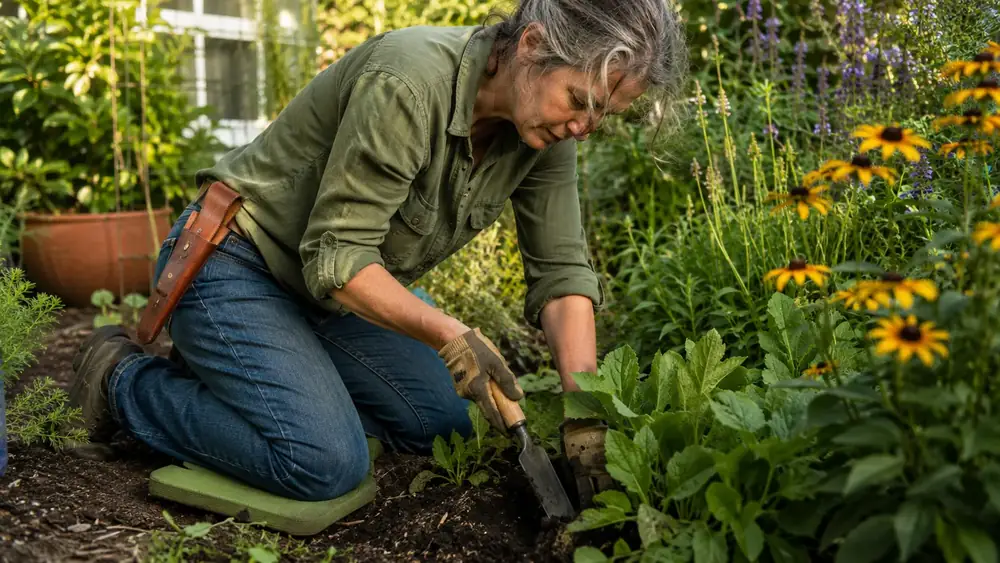
For years my garden bag looked like a small hardware store. A trowel for planting, a forked weeder for dandelions, a paring knife I'd smuggled out of the kitchen for cutting twine and dividing roots, and a little folding saw for anything woody. I'd kneel down in a bed, realize I needed the wrong tool, and shuffle six feet over to the bucket to swap. That ended the day I bought a PERWIN hori hori knife with a sheath, a 7-inch stainless blade, and a full-tang walnut handle that doesn't wobble loose after a season of real use.
If you've ever knelt in a bed with dirt-caked gloves and thought "I need a different tool for this," you already understand the appeal. A hori hori knife is a single blade that weeds, plants, digs, divides, and cuts, and it does all five better than you'd expect from something that fits on your belt. Here are ten reasons this one earns a permanent spot in my garden bag.
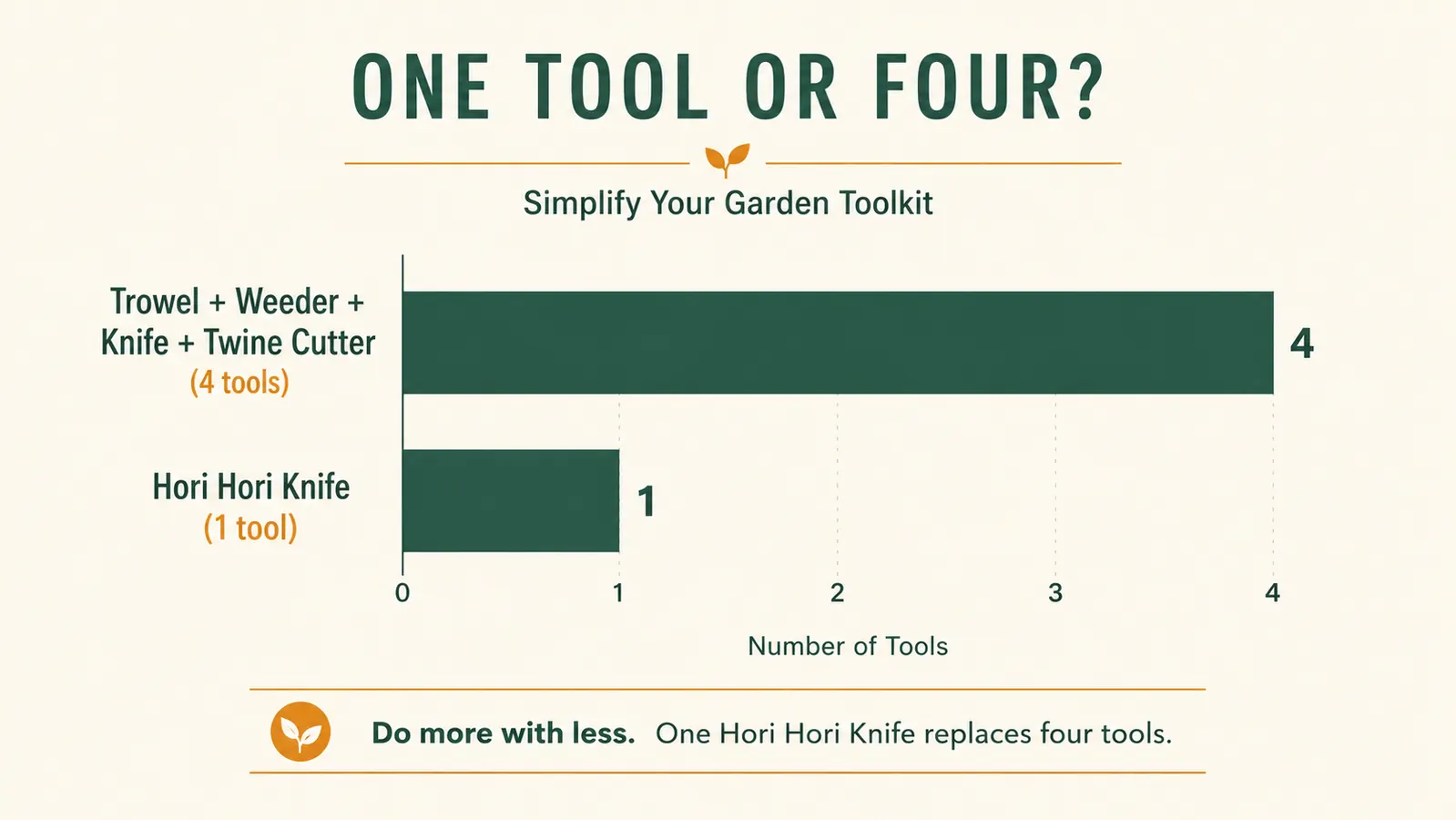
Stop Carrying Four Tools for One Bed
A trowel digs. A weeder pulls. A knife cuts. This one tool does all three, plus it fits in a sheath on your belt so you're not hunting through a bucket mid-job. Check today's price and specs on Amazon before your next planting day.
Amazon Check Today's Price on Amazon →One Blade Replaces Four Tools
A hori hori knife plants, weeds, digs, and cuts, which means you stop hauling a trowel, a forked weeder, a utility knife, and a hand saw across the yard. I noticed the difference the first weekend I used mine, planting a flat of marigolds along the front walk without once standing up to grab a different tool. The blade goes into the soil like a trowel, then flips to slice through a stubborn root, then turns again to pry a rock loose. It's the closest thing to a Swiss Army knife the garden world has, and once you've used one, going back to a single-purpose trowel feels like a step backward.
The Serrated Edge Cuts Roots a Trowel Can't Touch
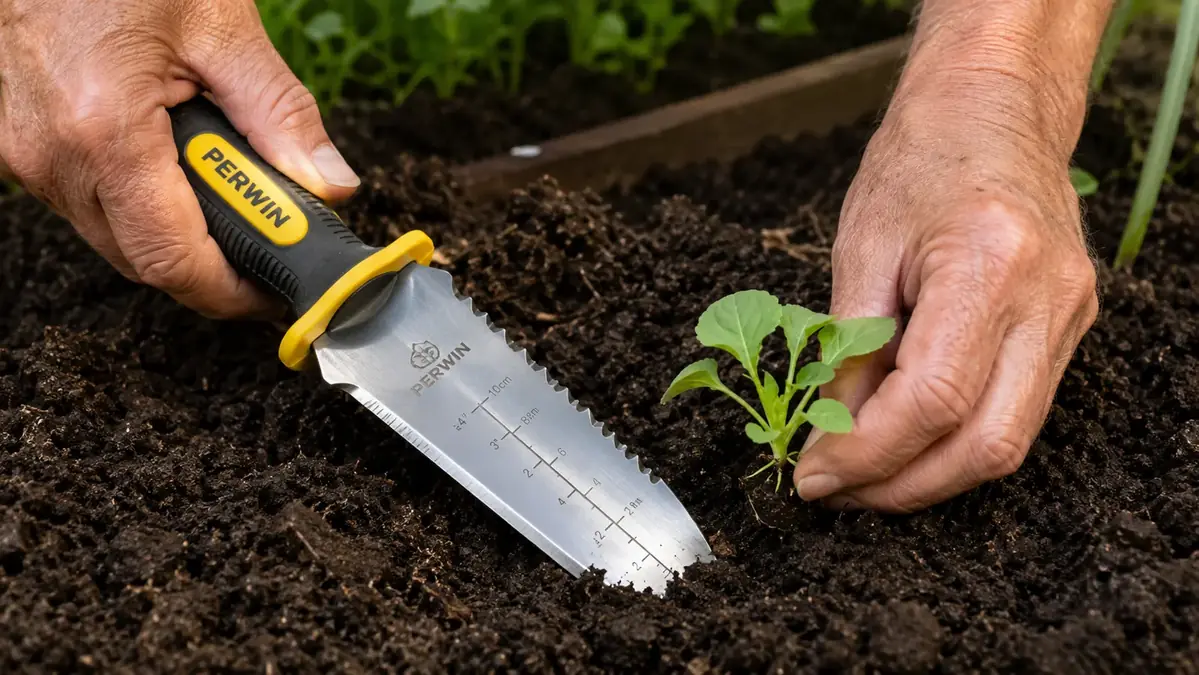
One side of the 7-inch blade has a serrated cutting edge, and that changes what the tool can do. A regular trowel just pushes soil aside, but this hori hori knife saws straight through thick taproots, tangled grass runners, and old perennial crowns without you having to yank and twist the whole plant loose. I use the serrated edge constantly on dandelions with roots that go a foot deep, the kind that snap off at the surface and grow right back if you don't get underneath them. It's also the tool I reach for in my guide on <a href="/how-to-remove-deep-rooted-weeds-with-a-hori-hori-knife">removing deep-rooted weeds with a hori hori knife</a>, where that serration does most of the real work.
Full-Tang Construction Means It Won't Snap on You
The blade on this PERWIN hori hori knife runs the entire length of the walnut handle instead of being a thin tang jammed into a hollow grip, which is where cheap garden knives fail. Full tang means the metal and the wood are one solid piece, so when you're prying up a rock or levering out a stubborn root ball, the handle doesn't crack or the blade doesn't wiggle loose. I've put real weight behind mine, using it as a mini pry bar more than once, and it hasn't budged. That kind of build quality is the difference between a tool that lasts one season and one that's still in your bag five years from now.
The 7-Inch Blade Digs Deep Enough for Real Planting
A cheap trowel usually maxes out around 4 or 5 inches of usable digging depth, which isn't enough for a lot of perennials and bulbs. This hori hori knife's 7-inch blade gets you real depth for daffodil bulbs, hostas, and young shrub starts without you having to switch to a shovel for anything but the biggest jobs. I planted a dozen daffodil bulbs last October with this knife alone, each hole clean and consistent, and never once reached for anything bigger.
Depth Markings Take the Guesswork Out of Planting
The blade has measurement markings etched right into the steel, so you can see at a glance whether you've dug down 2 inches for seedlings or 6 inches for a bigger bulb, instead of eyeballing it or measuring with your fingers like I used to. It sounds like a small thing until you're planting forty tulip bulbs in one afternoon and every hole needs to be the same depth. I stopped second-guessing myself the first time I used the markings, and my spring bulb bed has never come up more evenly.
It Divides Perennials Without Damaging the Root Ball
Splitting a hosta or a daylily clump with a shovel tends to be a violent, imprecise job that mangles more roots than it saves. The narrow, sharp blade on this hori hori knife lets you slice cleanly between root sections, so you can divide one healthy plant into three or four without tearing the whole thing apart. I've divided hostas this way for two seasons now, and the new divisions establish faster because the cuts are clean instead of ragged.
The Sheath Keeps the Blade Sharp and Your Hands Safe
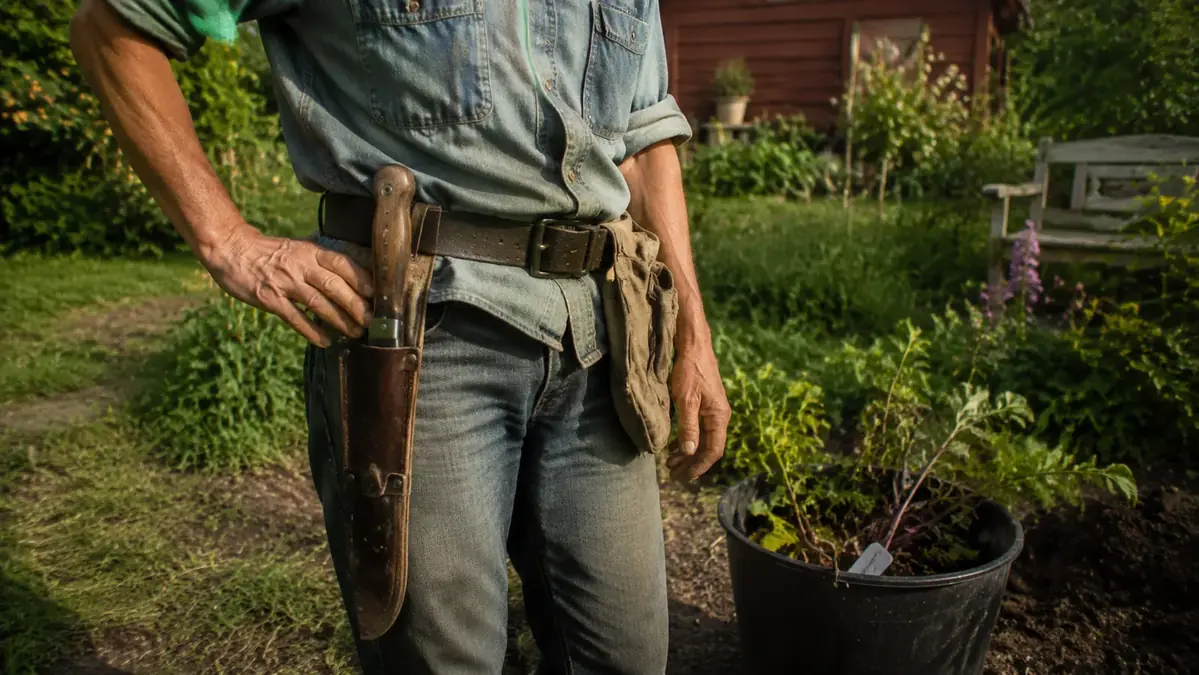
This knife comes with a sturdy sheath that clips onto a belt or garden apron, so the blade isn't rattling around loose in a bucket next to your gloves and pruners, dulling itself on everything it touches. I clip mine on before I start any planting session, and it means the knife is always exactly where I reach for it, not buried under a pile of stakes and twine. It also means I'm not fishing around a bag for a bare blade with my bare hand, which is how a lot of garden nicks happen.
The Walnut Handle Is Comfortable Through a Long Afternoon
A lot of garden tools have thin plastic handles that dig into your palm after twenty minutes of real work. The walnut handle on this hori hori knife is contoured and substantial enough to fill your hand, and it stayed comfortable through a full afternoon of dividing and replanting a bed of overgrown daylilies. If you've got any grip fatigue or mild arthritis, a handle that actually fits your hand instead of a generic cylinder makes a real difference by hour two.
Stainless Steel Holds an Edge and Resists Rust
This blade is stainless steel, which matters a lot for a tool that's going to spend its life in wet soil and get left outside more times than any of us like to admit. Mine has been rinsed with a garden hose more times than wiped down properly, and it still hasn't picked up a spot of rust after a full season, the same season I tracked in detail in my <a href="/perwin-hori-hori-review-long-term">long-term PERWIN hori hori review</a>. A blade that stays sharp and rust-free means less time maintaining the tool and more time actually using it.
It's Cheap Insurance Against a Bad Back
Every time you don't have to stand up, walk to the bucket, dig through it, and kneel back down for a different tool, you're saving your knees and your back a small amount of strain. Multiply that by every weed, every bulb, and every division in a full afternoon of yard work, and one tool that does five jobs starts to look like real physical relief, not just convenience. Check today's price on Amazon and weigh it against how many trips back to the tool bucket you're willing to make this season.
What I'd Skip
I'd skip the ultra-thin stamped-steel hori hori knives that show up for a few dollars less. They flex when you try to pry with them and the blade edge dulls after a handful of uses. I'd also skip any version without a sheath included, since a bare blade rattling around in a garden bag either dulls fast or finds your hand at the worst moment. And skip anything with a hollow plastic handle, it's the first thing to crack when you actually lean on the tool the way a hori hori knife is meant to be used.
One good blade beats four mediocre tools every time you kneel down in a bed.
One Tool, Every Bed, All Season
Once you've weeded, planted, and divided with a single blade instead of switching tools four times an afternoon, you won't want to go back. See today's price on the PERWIN hori hori knife on Amazon.
Amazon Check Today's Price on Amazon →