
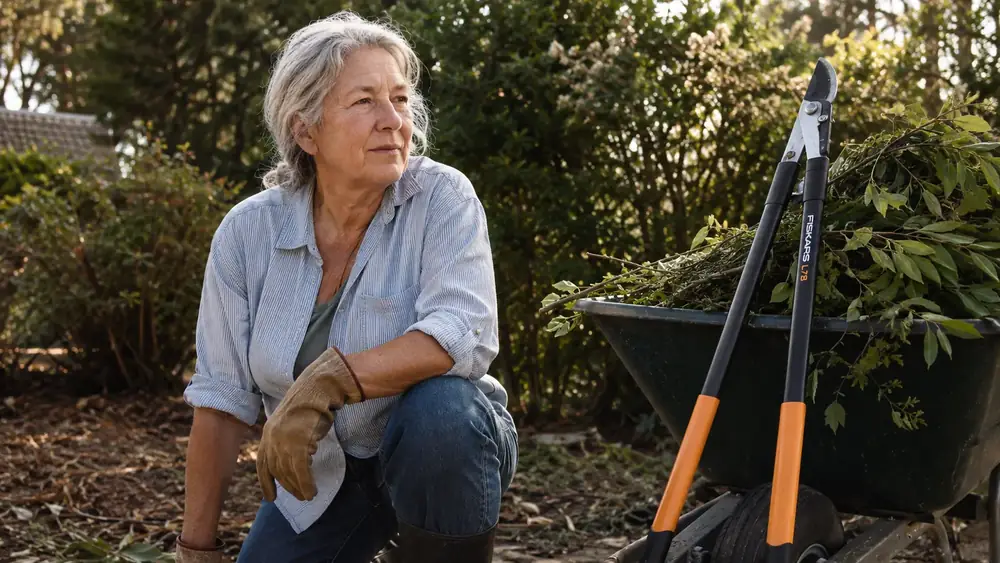
Last March I stood in front of a forsythia hedge that hadn't been cut back since before we moved in. Some of those canes were pushing an inch and a half thick, gnarled and woody at the base, and my old bargain-bin pruners just bounced off them. That's what sent me looking for real loppers, and after reading through a dozen reviews I landed on the Fiskars 28-inch bypass loppers. I've now put them through one full pruning season, from that first stubborn hedge in March through deadwooding an old lilac in October, and I want to walk you through exactly what that season looked like.
The Fiskars name kept coming up because their bypass blade is hardened, precision-ground steel, and the tool is rated for branches up to 1.5 inches in diameter. That's a real number, not a marketing number, and I tested it against that number all season long, on green wood, on gray deadwood, and on everything in between.
The Quick Verdict
A genuinely tough bypass lopper that handled everything from green whips to seasoned deadwood without complaint, though the blade needed one mid-season sharpening and the handles are long enough that storage takes some planning.
Amazon Check Today's Price →Still fighting overgrown branches with pruners that were never built for the job?
The Fiskars 28-inch bypass loppers gave me the leverage and the clean cut I'd been missing all along. Check today's price on Amazon before your next pruning weekend.
Amazon Check Today's Price on Amazon →How I've Used It
I'm not a landscaper, I'm just a backyard gardener with about a third of an acre and more overgrown shrubs than I'd like to admit. Over eight months I used these loppers on three separate hedges, a stand of suckers coming up from an old maple stump, a lilac that needed hard renewal pruning, and the annual cutback of my raspberry canes. That's a wide range of wood, from pencil-thin green growth to gray, seasoned deadwood that had been sitting untouched for two winters.
I kept a rough log in my garden notebook because I wanted to know if the first-week enthusiasm would hold up over a real season, not just one afternoon of eager cutting. Short version, it mostly did, and where it didn't, I'll tell you exactly where, because I don't think a review does you any good if it only tells you the good parts.
The forsythia was the real stress test. Those canes were dense and a little dried out at the base, closer to hardwood than a live shrub cane, and I fully expected the loppers to slip or crush rather than slice. Instead the bypass blade bit in clean on the first squeeze on anything under an inch, and even the thicker one-and-a-half-inch canes went down in two or three good passes instead of the sawing, twisting fight I was bracing for. By the end of that first weekend I'd cleared enough cane to fill my dump cart four times over, and my hands weren't nearly as wrecked as I expected.
The raspberry canes were a different kind of test entirely, thin and whippy but tangled together in a thicket that made it hard to get a clean angle on any single cane. That's where the bypass action really showed its worth, I could slip the blade in at an angle and take a cane out without dragging the whole row sideways the way an anvil blade tends to. It's a smaller job than the forsythia, but it happens every single spring, so it matters just as much to how I judge this tool.
The Blade and the Cut
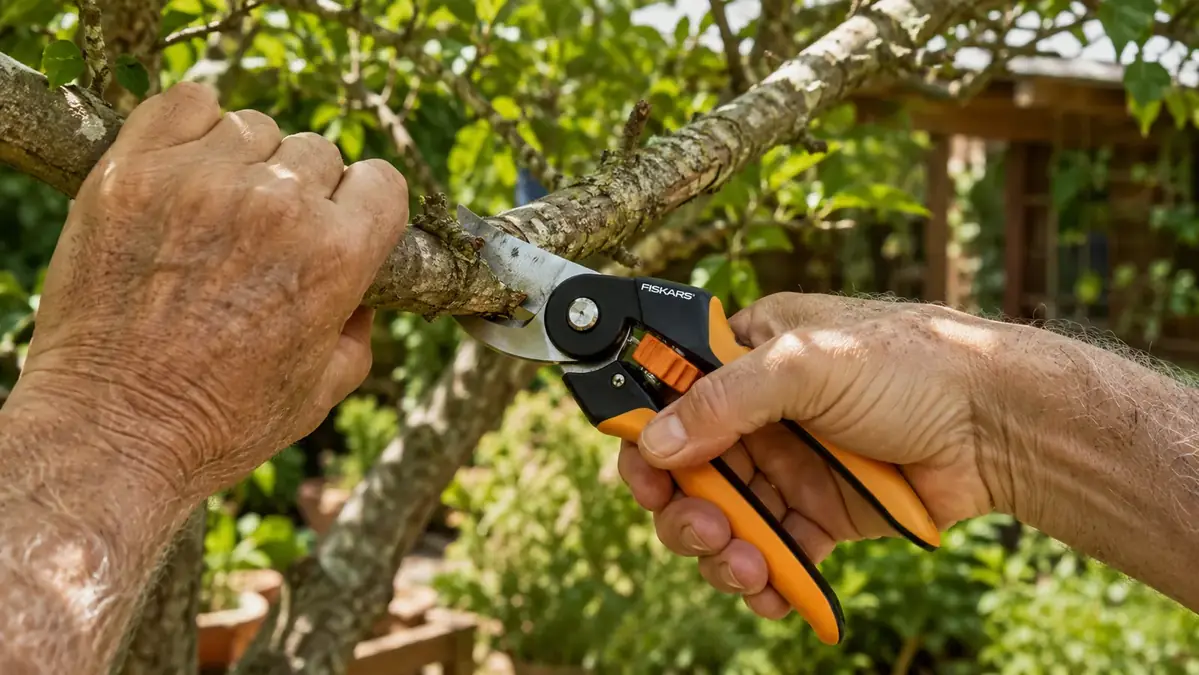
Bypass blades work like scissors, one curved blade sliding past a hook that holds the branch steady, and that design matters if you care about the health of what you're cutting. Anvil loppers, which chop straight down onto a flat plate, tend to crush the fibers on one side of the cut. On live wood, that crushed edge is where disease and pests get a foothold, and it heals slower and uglier than a clean bypass cut. The Fiskars bypass blade left clean, almost surgical cuts on live canes, which is exactly what you want when you're pruning something you plan to keep alive and blooming next spring.
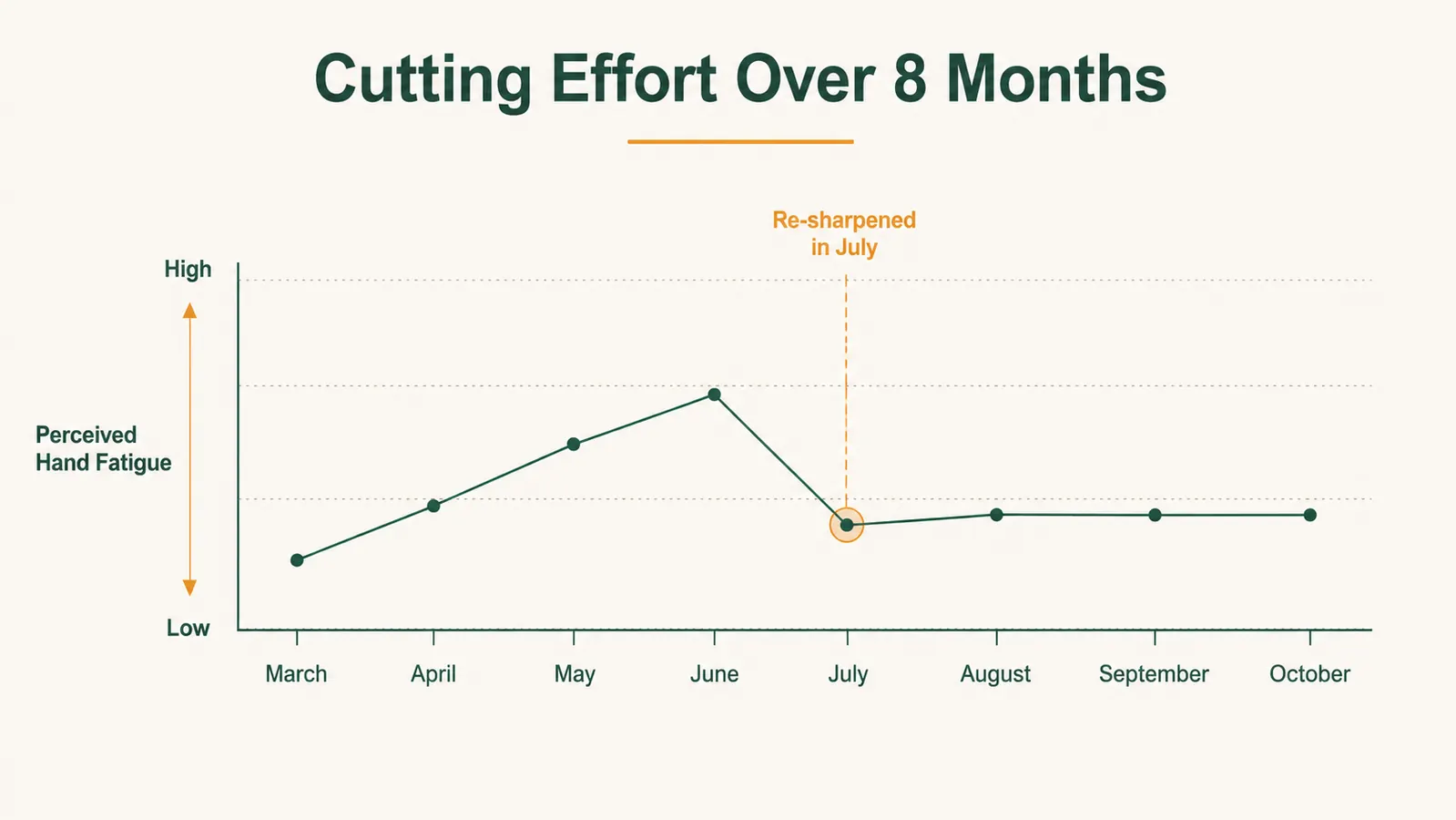
The steel held its edge for about four months of regular use before I noticed I was having to work harder on anything over an inch thick. I touched it up with a simple hand file in ten minutes, and it went right back to slicing cleanly instead of tearing. That's a fair maintenance schedule for a tool that's out cutting real wood every week, not a flaw, just something to expect and plan for, the same way you'd expect to sharpen a good kitchen knife.
One thing I didn't expect, the low-friction coating on the blade actually mattered day to day. Sap builds up fast on forsythia and lilac cuts, and on my old pruners that sticky residue would gum the pivot within a season, slowing the blades down until they felt like they were cutting through molasses. The Fiskars blade wiped clean with a rag most days, and I never had the blade binding from built-up sap the way I used to with cheaper tools.
The Handles, the Leverage, and My Wrists
I'm 61, and I've got the beginnings of arthritis in my right hand, so leverage and grip comfort are not small details for me, they're the difference between finishing a job and giving up halfway through. The 28-inch handles give you real mechanical advantage, and Fiskars builds in what they call a gear mechanism at the pivot that multiplies your squeeze into more cutting force without you having to muscle it. I could feel the difference compared to my old 22-inch pruners immediately, cutting a three-quarter-inch branch took noticeably less hand strength, and I wasn't gripping so hard my knuckles turned white.
The shock-absorbing bumper at the base of the handles is the detail I appreciated most by August. Without it, the jolt of the blades snapping shut on a thick branch travels straight up into your wrist and elbow, and after a couple hours of pruning that adds up to real soreness that lingers into the next day. The bumper cushions that impact enough that I could do a full afternoon of deadwooding the lilac without my hands aching that evening, which used to be a guarantee with my old tool, to the point I'd sometimes reach for the ibuprofen before dinner.
The handles are coated in that bright Fiskars orange, which sounds like a cosmetic detail until you set the loppers down in a pile of leaves or against a fence post and walk away for twenty minutes, which I did more than once this season. I never lost them in the yard, and that orange has genuinely saved me from leaving a tool out in the rain overnight, which is more than I can say for the dark green pruners I used to own.
What Else I Considered
Before I settled on these, I looked hard at a couple of anvil-style loppers, including one from a big-box hardware brand that was ten dollars cheaper. I actually borrowed a neighbor's anvil lopper for an afternoon to compare it against my own bypass pruners on the same lilac. The anvil tool crushed and split the bark on almost every cut, even on branches well under its rated capacity, and I could see right away that wasn't something I wanted to do to shrubs I planned to keep alive.
I also looked at a shorter 22-inch bypass lopper, which would have been easier to store and a little lighter to carry around the yard. But the cutting capacity dropped to around an inch, and I knew from experience that my forsythia and lilac canes regularly outgrow that. The extra six inches of handle on the 28-inch model was the deciding factor, and looking back after a full season, I'm glad I didn't undersize the tool just to save a little shelf space.
Price factored in too, though not as much as I expected going in. The Fiskars sat right in the middle of what I was comparing, not the cheapest option on the shelf and not the priciest, and after a season of use I think that middle price bought real value. A cheaper tool that crushes branches or dulls in a month costs you more in frustration than the few extra dollars ever save you, and that's become one of my standing rules for buying garden tools now.
Where They Struggled
I want to be straight with you about the tradeoffs, because no tool is perfect for every job. The 28-inch length that gives you leverage on thick branches also makes these loppers awkward in tight spaces. Working inside a dense hedge or reaching between crowded shrub branches, the long handles kept catching on neighboring stems, and there were a few spots where I had to switch to hand pruners just to get the blade angle right.
Storage is the other real consideration. At 28 inches long, these don't fit in a standard tool bucket, and they take up a full slot on my garage wall rack. If you're tight on shed or garage space, that's worth planning for before you buy, not after, because I know from experience how frustrating it is to bring home a tool with nowhere good to put it.
The weight is manageable but noticeable. After using these for a full afternoon of hedge work, my shoulder felt it, mostly from holding the extended handles up and out rather than from the squeezing motion itself. If you've got any shoulder issues, plan on breaks every 30 to 40 minutes rather than pushing through a whole hedge row at once, the same way I've learned to pace myself now instead of trying to finish everything in one go.
What I Liked
- Clean bypass cut that doesn't crush live wood, better for the plant's health
- Real cutting capacity up to 1.5 inches, tested on actual seasoned deadwood
- Shock-absorbing bumper noticeably reduces hand and wrist fatigue over long sessions
- Gear-driven leverage cuts thick branches without excessive squeezing force
- Bright orange handles are easy to spot when set down in leaves or brush
Where It Falls Short
- 28-inch length is unwieldy inside dense, crowded hedges
- Takes up more storage space than shorter pruners or loppers
- Blade needed a hand-file touch-up after roughly four months of regular use
- Extended reach can tire your shoulder before your hands give out
The forsythia canes I expected to fight me went down clean in two or three passes, and that's when I stopped second-guessing the purchase.

Who This Is For
If you've got established shrubs, overgrown hedges, or a stand of suckers that your hand pruners can't handle, these loppers earn their spot in your shed. They're especially good for anyone doing renewal pruning, cutting old lilac, forsythia, or viburnum canes back hard to encourage fresh growth, because the clean bypass cut helps the plant recover faster than a crushed anvil cut would. Gardeners with hand strength concerns will appreciate the geared leverage, and anyone who's tired of a blade that slips or crushes instead of slicing will notice the difference within the first cut.
It's also worth a look if you're managing a bigger property than a typical suburban lot, say a half acre or more with mixed plantings, because you'll run into thick canes and deadwood often enough that a lightweight pruner just won't keep up. I'd put anyone doing their own hedge maintenance without hiring it out squarely in the target buyer for this tool.
Who Should Skip It
If your yard work is mostly deadheading flowers, trimming small perennials, or light shaping on young shrubs, this is more tool than you need, a pair of hand pruners will serve you better and cost less. And if storage space is genuinely tight, a shorter 20 or 22-inch lopper might be the more practical fit even though you'll give up some cutting capacity on the thickest branches.
And if you're working almost entirely in raised beds or container gardens with soft new growth, you'll rarely if ever hit the kind of thick, woody branches these loppers are built for, so the extra length and weight would just be dead weight hanging in your shed.
One season in and this hedge finally looks like it belongs to someone who cares for it.
If you've got overgrown shrubs or deadwood waiting on you, don't spend another weekend fighting the wrong tool. See today's price on the Fiskars 28-inch bypass loppers on Amazon.
Amazon Check Today's Price on Amazon →