
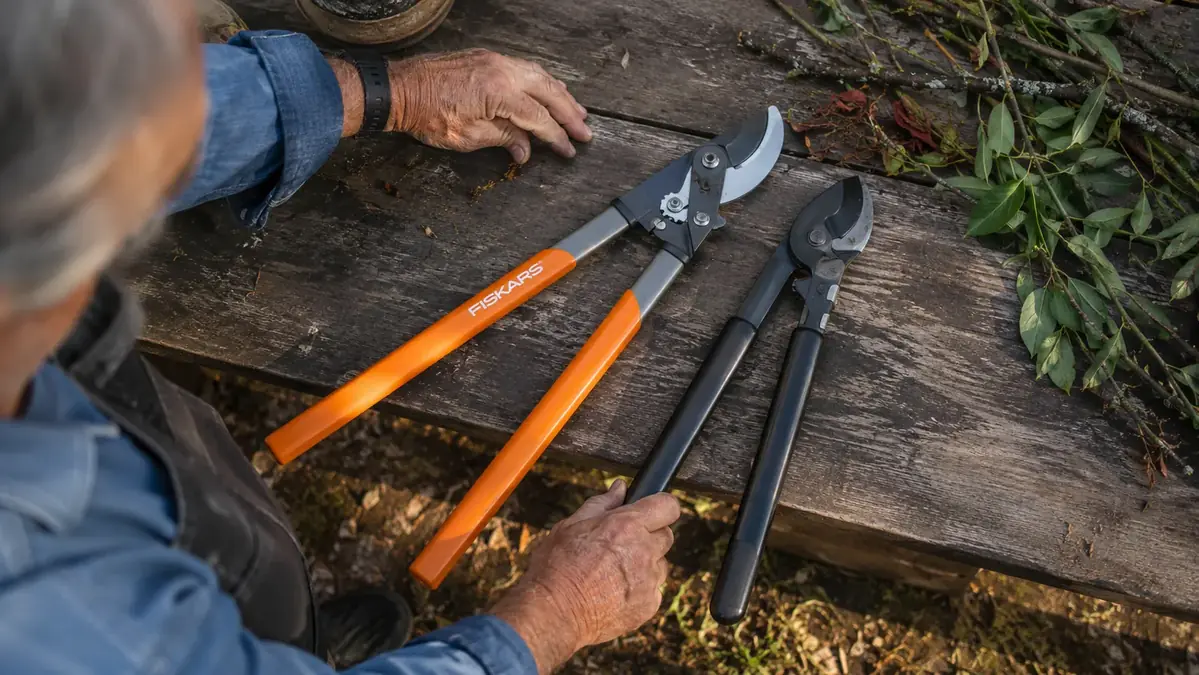
If you've ever stood in the tool aisle staring at two pairs of loppers that look almost the same but definitely aren't, here's the short answer: for anything alive, cutting canes off my roses, thinning a lilac, taking a limb off the crabapple, I reach for my Fiskars 28" bypass loppers every single time. The anvil-style pair sits in the shed for deadwood and the occasional thick, dry stub I don't care about bruising.
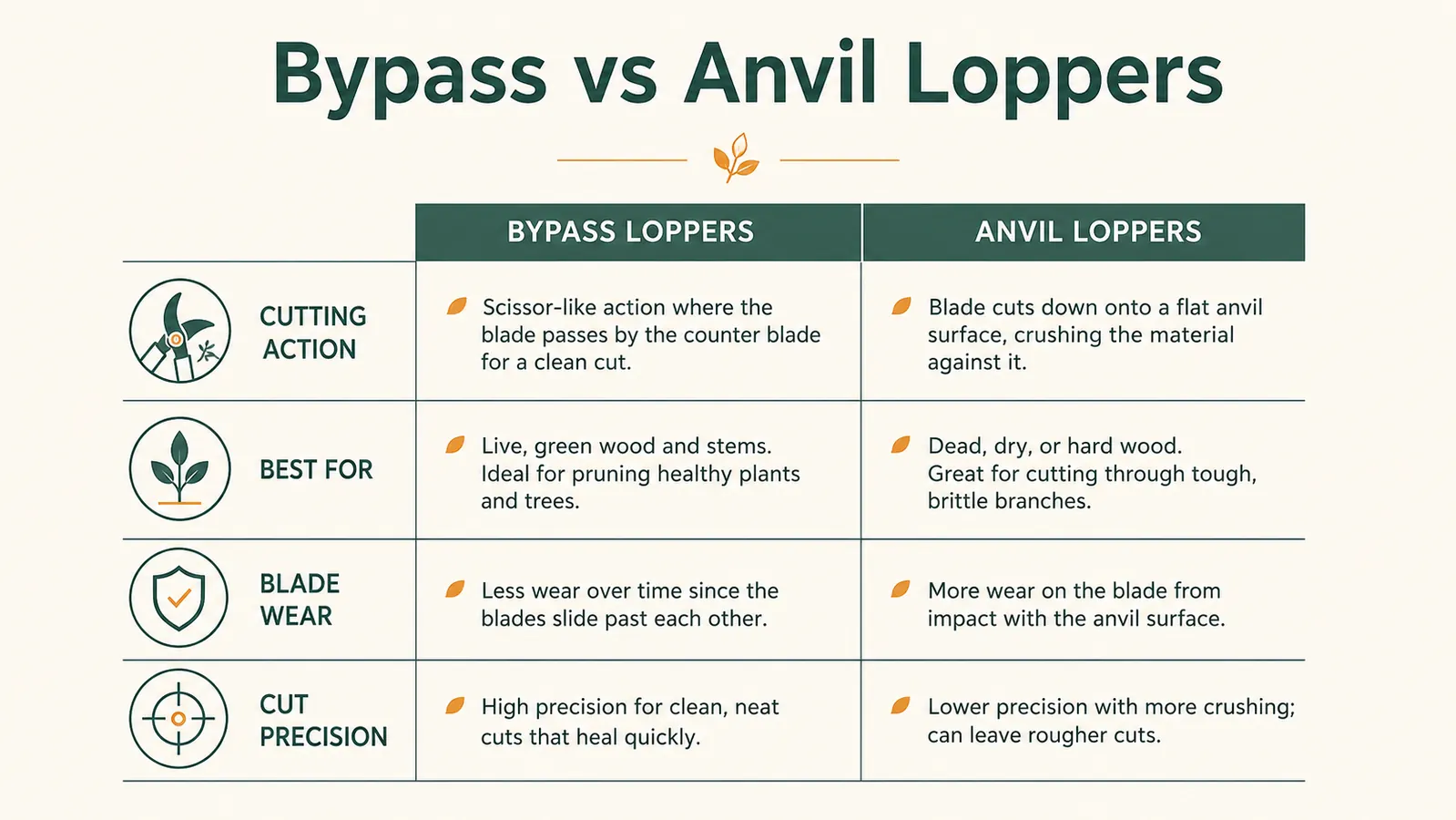
I've owned both for years, and the difference isn't marketing. It's mechanical. Bypass loppers cut like scissors, two curved blades sliding past each other. Anvil loppers cut like a knife on a cutting board, one blade coming down flat onto a metal plate. That single design choice changes everything about what happens to your plant after the cut, and after twenty-some years of pruning everything from young fruit trees to overgrown forsythia, I've got strong opinions about when each one earns its spot in the shed.
I ran both side by side for a full pruning season, spring cleanup through fall deadheading, on the same rose bed, the same overgrown lilac hedge, and a pile of storm-downed branches after a June thunderstorm knocked a limb off my neighbor's maple. Same person, same arm strength, same plants. What follows is what actually happened, not what the packaging promises.
| Spec | Fiskars Bypass Loppers | Standard Anvil Loppers |
|---|---|---|
| Cutting Action | Scissor-style, two blades slide past each other | Single blade closes onto a flat anvil plate |
| Best For | Live, green branches up to 1.5" thick | Dead, dry, or already-fallen wood |
| Cut Cleanliness | Clean, close cut that heals fast | Crushes fibers on the far side of the cut |
| Precision | Cuts flush near the trunk or bud | Leaves a small stub, harder to angle |
| Grip Strength Needed | Moderate, shock-absorbing handle helps | Higher, no shear advantage on live wood |
| Blade Wear Over Time | Slower, single beveled edge stays sharp longer | Faster, anvil plate dents and blade edge dulls |
| Cut Capacity | 1.5" diameter branches | Usually 1.25" to 1.5", but strains past 1" |
| Price Range | Around $20, today's price on Amazon | Similar range, $15 to $25 |
Where the Fiskars Bypass Loppers Win
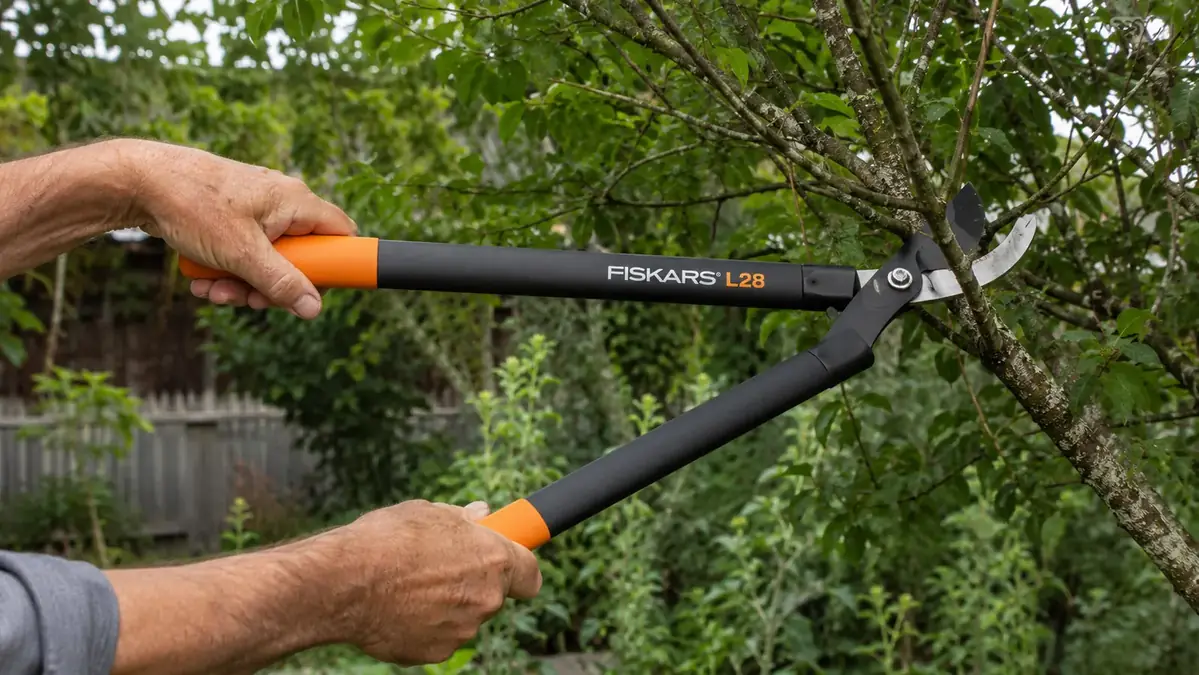
The whole reason bypass wins on live wood comes down to that scissor action. When two sharp blades slide past each other, the branch gets sheared cleanly, the same way a pair of good kitchen shears slices through a stem instead of smashing it. I noticed this the first spring I switched, thinning suckers off a young peach tree. The cuts healed over smooth within a few weeks. No ragged edges, no dieback creeping down the branch from a crushed cut.
That matters more than people think. A crushed cut on a live branch opens the door to disease and rot, especially on stone fruit trees and roses, which are notoriously fussy about how they're pruned. The Fiskars blade also gets you closer to the collar of the branch, so you're not leaving a stub that just sits there and eventually dies back anyway. My neighbor still uses anvil loppers on her rose bushes and every June I can spot the difference from the sidewalk, her canes look ragged where mine look tidy.
There's a second thing the bypass design does well that took me a season to appreciate: it holds an edge longer. Because the two blades slide past each other instead of hammering into a metal anvil plate every single cut, there's less impact wear on the steel. I sharpen mine maybe twice a season with a simple file, and it still bites clean through a green forsythia stem without me leaning into it. My old anvil pair needed sharpening almost monthly during peak pruning season just to keep up, and even then the anvil plate itself had picked up small dents that made every cut a little less precise than the last.
The 28" handle length is worth mentioning too, separate from the blade style. It gives you real leverage on a 1.5" branch without needing two hands white-knuckled on the grips, and it reaches into the center of a dense shrub, which matters a lot once your lilac or forsythia has gone a couple years without a real thinning. I've got a mild grip issue in my right hand from years of gardening, and the shock-absorbing bumper on the Fiskars handle genuinely softens the jolt when a cut finishes, something the stiffer anvil handles never bothered to include.
I put the Fiskars pair through a real stress test on a hydrangea that had grown leggy and woody at the base, thick old canes mixed in with fresh green growth. Bypass handled both without a hitch, the sharp beveled blade found the shear point even on the tougher two-year wood, and the branch dropped clean instead of hanging by a thread of bark the way a crushed cut sometimes does. That's the other quiet benefit nobody puts on the box: a clean cut falls away in one piece, so you're not standing there yanking a half-attached branch loose by hand.
Maintenance is simple either way, but the routine looks a little different. On the Fiskars pair, I wipe the blade down with an oiled rag after a heavy session, especially if I've been cutting anything sappy like lilac or forsythia, and give the pivot bolt a drop of oil every few months so the scissor action stays smooth. Skip that and any bypass lopper, Fiskars or otherwise, will start to feel gritty and the cut quality drops off fast. Anvil loppers are more forgiving about upkeep since there's no precision alignment to protect, which is one more reason I don't mind leaving the anvil pair out in the shed a little longer between cleanings.
Where Anvil Loppers Win
I'm not going to pretend anvil loppers are useless, because they're not. When a branch is already dead, brittle, and dry, the crushing action doesn't matter, there's no living tissue to protect. Anvil loppers actually take less arm effort on dry deadwood because the flat anvil plate gives the blade something solid to push against, so you get more raw cutting force per squeeze.
I keep mine for exactly that job: clearing dead branches out of the hedgerow, cutting up storm debris, breaking down brush for the yard waste bin. If I'm not worried about the plant healing, anvil loppers get the job done a little faster and with a little less hand fatigue on tougher, drier material. After that June storm dropped a maple limb across my neighbor's driveway, the anvil pair chewed through the dry, splintered wood faster than the bypass would have, mostly because dead wood doesn't care whether it's sheared or crushed, it's already dead.
Anvil loppers also tend to be a hair more forgiving if you're not lining up the cut perfectly. Because the blade just needs to meet the flat plate anywhere along its length, a slightly crooked angle still gets the branch off, where a bypass lopper wants a cleaner approach to shear properly. For someone doing rough brush clearing rather than careful ornamental pruning, that forgiveness is worth something, especially if your hands aren't as steady as they used to be by the end of a long afternoon in the yard.
There's also a durability angle worth naming honestly. Because anvil loppers aren't relying on two blade edges staying perfectly aligned to shear cleanly, a cheap anvil pair that's gone slightly out of true will still more or less do its job on deadwood. A cheap bypass pair that's gone out of alignment, on the other hand, starts leaving that same crushed, ragged cut you were trying to avoid in the first place. That's part of why I don't mind a lower-cost anvil lopper for rough work, but I spend the extra few dollars on a name brand for anything I'm using on live plants.
Stop bruising your live branches with the wrong tool
If you're cutting anything green this weekend, roses, shrubs, fruit trees, the Fiskars bypass design is the one that won't leave your plant worse off than when you started.
Amazon Check Today's Price on Amazon →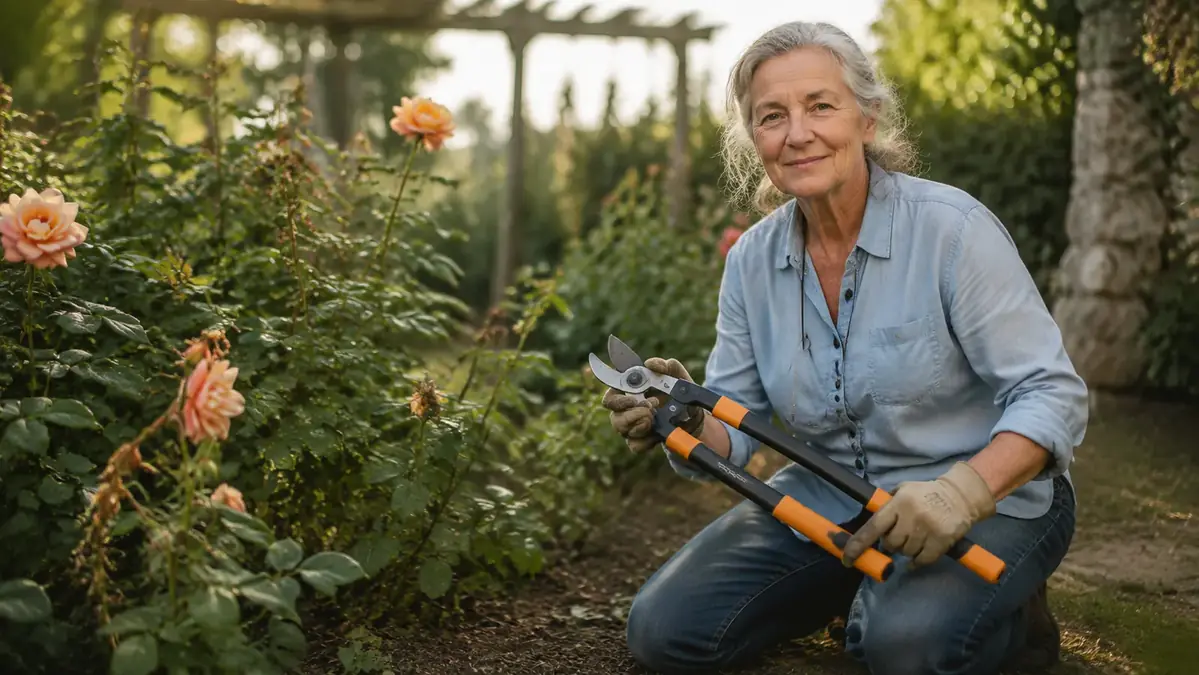
Who Should Buy Which
If you've got roses, a fruit tree, ornamental shrubs, or basically anything you want to keep alive and looking good, get the bypass loppers. That's true whether you're pruning a single rose bed or maintaining a full backyard border. The Fiskars 28" handle gives you enough reach to get into the middle of a dense shrub without climbing in after it, and the shock-absorbing bumper genuinely does save your wrists on a long pruning session, I noticed it most after cutting back an overgrown butterfly bush that had gone three years without attention.
If your main job is clearing storm damage, breaking down dead brush, or you already own a good bypass pair and want a second tool for the ugly deadwood jobs, an anvil lopper earns its keep in the shed. Plenty of gardeners end up owning both, that's honestly where I landed. But if you're only buying one pair this season and most of your cutting happens on living plants, bypass is the tool that matches how a plant actually heals.
One more thing worth saying plainly: if you're a beginner and you're only going to own one lopper for the next several years, buy the bypass pair. Almost everything a home gardener cuts in a normal season, canes, suckers, water sprouts, thin live branches, is living tissue, and bypass handles all of it better. You can always pick up a cheap anvil pair later for the occasional deadwood job. Starting the other way around means you'll be crushing live wood for years before you realize what you're missing.
And if you're already leaning toward the Fiskars name because you've heard it holds up, that matched what I found too. Mine has been through four full pruning seasons now, rain, dropped in the mulch pile more than once, left out overnight when I forgot it on the potting bench, and the blade still locks up tight and cuts clean. That's the kind of tool you buy once and hand down, not the kind you're replacing every other spring.
So here's where I land, plainly. Walk into any pruning season with the Fiskars bypass loppers as your main tool, and use an anvil pair strictly as backup for the dead stuff. That order rarely fails you. Reverse it, lead with anvil on your living plants, and you'll spend years wondering why your shrubs look a little rougher after every cut than they should.
Budget is rarely the deciding factor here since both styles land in roughly the same price range, so don't let a few dollars either direction talk you out of the tool that actually matches your plants. I'd rather spend a little more on the Fiskars bypass pair and use it for the next several seasons than save five dollars on an anvil lopper and end up second-guessing every cut I make on something I actually want to keep alive.
One pair, cleaner cuts, healthier plants
Grab the Fiskars 28" bypass loppers before your next pruning weekend and see the difference in how fast your cuts heal.
Amazon Check Today's Price on Amazon →