
Every gardening forum I'm on has at least one thread singing the praises of a dump cart, and mine is no exception, but eighteen months of using the Gorilla Carts Heavy-Duty Poly Yard Dump Cart on my quarter-acre in a way that actually tests it, hauling wet gravel up a slope, leaving it parked outside through two winters, running it over roots and ruts on the back path, has taught me a few things the glowing reviews tend to skip. This isn't a takedown. I still reach for mine every single week, usually more than once. But if you're about to spend two hundred dollars on one, you deserve the parts nobody puts in the headline.
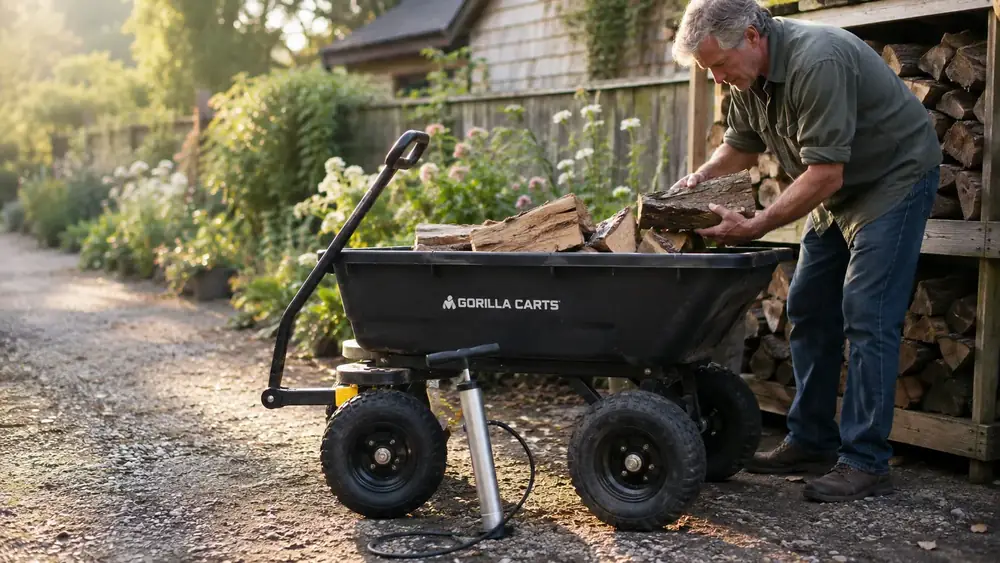
My husband Warren and I bought ours in March of last year to move split firewood rounds from the splitter to the rack by the shed, a job that used to mean something like sixty separate wheelbarrow trips down a narrow path lined with paver edging that chewed through wheelbarrow tires for fun. The dump cart solved that problem in one long Saturday afternoon. But it also introduced a few new problems I didn't see coming, a tire that lost pressure faster than the box implied, a tub that shows every scuff after a summer of gravel hauling, and a hitch pin I've already had to replace once. Here's what a year and a half of actual use looks like, not the first-week impression.
The Quick Verdict
A genuinely tough poly dump cart that hauls everything from firewood to wet gravel without cracking, but the stock tires and hitch pin need real attention, and the tub does not stay showroom-clean once you put it to work.
Amazon Check Today's Price →Tired of your wheelbarrow tipping over on the same three ruts every trip?
The Gorilla Carts dump cart fixed that for us in one afternoon, tires and all. See today's price on Amazon before you plan your next load.
Amazon Check Today's Price on Amazon →How I Actually Put Mine to the Test
I didn't want to write a review after one nice afternoon of moving mulch bags, so I set out to use this cart the way I'd actually use any tool I was paying real money for. That meant weekly firewood runs from October through January, three separate loads of pea gravel for a path I was rebuilding along the side yard, and leaving the cart parked outside under a lean-to roof for both winters instead of babying it in a heated garage. I live in a zone 6 climate, so that meant freezing nights, a few inches of snow that sat for weeks at a time, and enough temperature swings to stress-test both the tires and the poly tub honestly.
I also loaded it heavier than most people probably would on a normal day, on purpose. My old steel wheelbarrow held maybe three cubic feet before it got too tippy to control, so I was curious whether the Gorilla Cart's rated 1,200-pound capacity and 6-cubic-foot tub actually meant something in practice, or whether it was a number on a box that nobody was ever meant to hit. Short answer: it holds up. Long answer is everything below.
My neighbor down the road has an older steel dump cart from a different brand, and I borrowed it for a week early on just to have a real comparison instead of guessing from memory. The steel tub was heavier empty, harder to tip by hand once the release stuck slightly with rust, and had already picked up a dent from a dropped paver. The Gorilla Cart's poly tub and lighter overall weight made it noticeably easier for me to maneuver alone, which mattered more than I expected once Warren was traveling for work and I was doing the fall cleanup solo.
What Nobody Tells You About the Tires
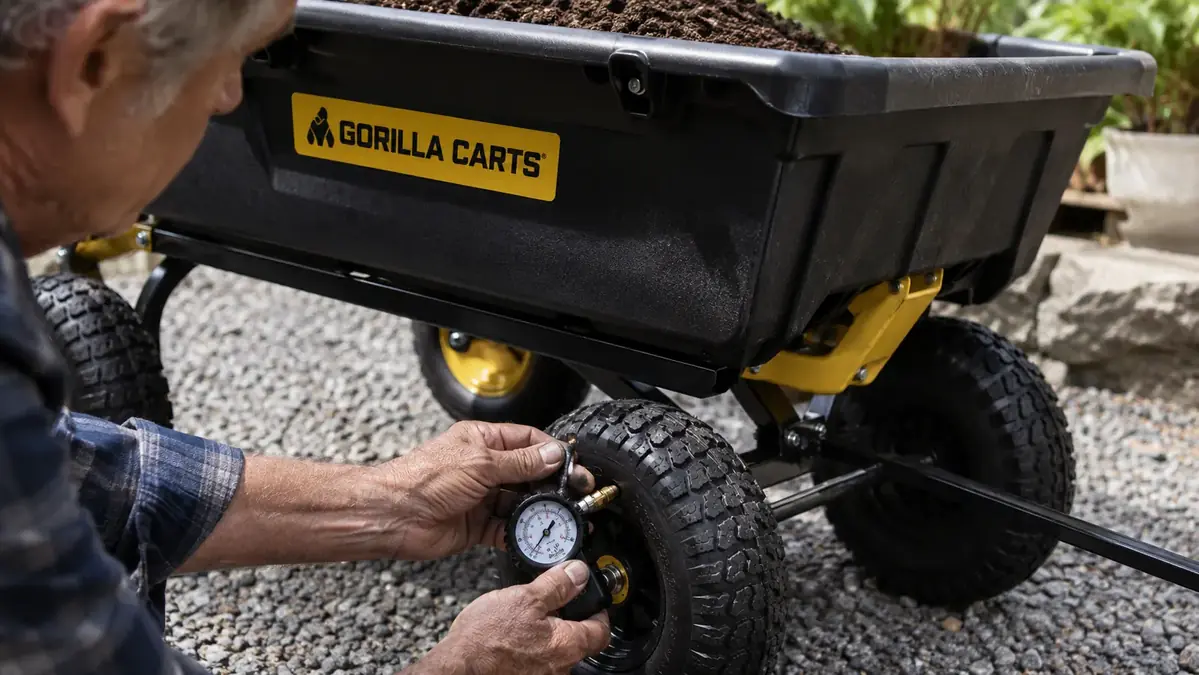
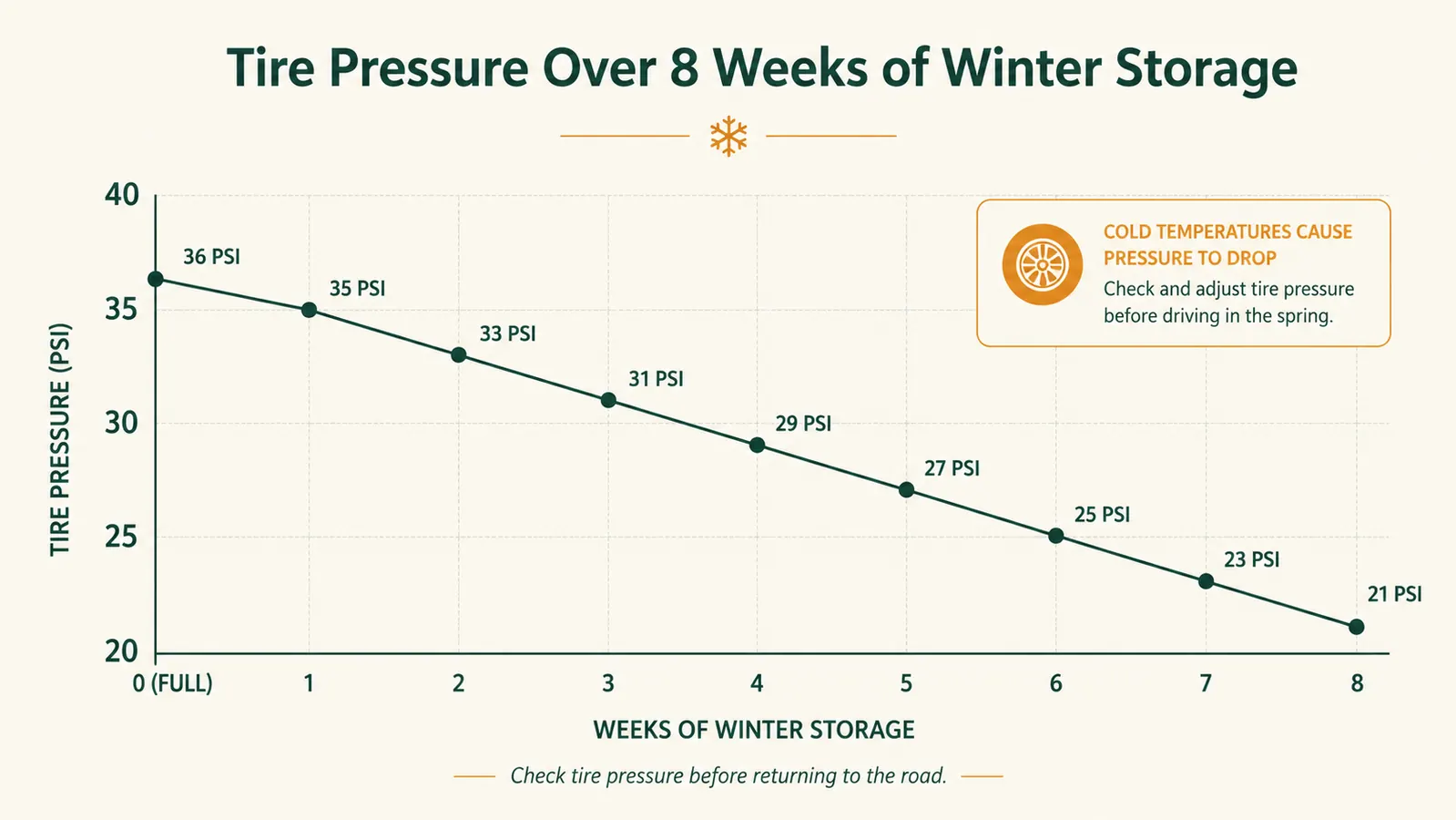
The pneumatic tires are the single biggest reason I bought this cart over a solid-wheel version, they roll over roots and ruts that would stop a wheelbarrow cold, and they still do. What the listing doesn't tell you is how much upkeep they need. Gorilla Carts recommends keeping them around 10 to 12 PSI, and I check mine now with an actual gauge because I learned the hard way that eyeballing a tire is a bad habit. Left outside over our first winter, one tire dropped from full to noticeably soft in about three weeks in freezing temperatures, enough that the cart pulled slightly to one side until I topped it off with a hand pump.
In month seven I got an actual flat, not from gravel like I expected, but from a landscape staple buried in a load of mulch I'd picked up from a bulk supplier. I patched it with a cheap plug kit rather than replacing the tube, and it's held fine since, but it was a twenty-minute detour I hadn't budgeted for. By month fourteen, with the cart stored outside and getting full sun most of the day, I noticed the beginnings of fine sidewall cracking on both tires, the kind of hairline weathering you see on a garden hose that's been left in the sun too long. It hasn't caused a leak yet, but it's the first sign that these tires are not going to last forever if you don't rotate the cart into shade or a shed between uses.
None of this means the tires are a dealbreaker. It means budget fifteen minutes a month for a pressure check, keep a hand pump in the shed, and plan on this being a wear item you'll eventually replace, probably around year three or four if you store it outside like I do.
The Tub Wear You Don't See in the Product Photos
The poly tub is genuinely tough. I've dropped chunks of flagstone into it, dragged it over gravel loaded to the brim, and it has never cracked, split, or shown a stress fracture anywhere near the pivot hardware. That part of the marketing is true. What the product photos don't show you is what that tub looks like after a season of real use. Mine is scuffed white in long streaks along the bottom where gravel has scraped against the poly, and the glossy black finish has gone a shade duller and grayer after a summer of direct sun. It still functions exactly the same. It just doesn't look like the catalog picture anymore, and I wish someone had told me that going in so I wasn't surprised the first time I looked at it after a busy month.
The other thing I keep an eye on is the hardware where the tub bolts to the frame. There's a slight whitening, almost a stress-blanching, in the poly right around a couple of the bolt holes after repeated heavy loads. It hasn't progressed into a crack in eighteen months and I don't expect it to anytime soon, but it's exactly the spot I'd tell a friend to check every few months if they're loading this cart to anywhere near its rated capacity on a regular basis.
The Weight Limit, In Plain English
Here's the math nobody walks you through. Wet pea gravel runs close to 100 pounds per cubic foot, so a full 6-cubic-foot tub of wet gravel weighs somewhere around 600 pounds, which is half the cart's rated 1,200-pound capacity. I hauled loads right around that weight on flat ground multiple times last summer without the axle sagging or the frame flexing in any way that worried me. The cart handled it exactly like the specs promise.
Where the math gets honest is when you're pulling it by hand instead of towing it behind something with an engine. I'm five foot four and in decent shape from a lifetime of gardening, and hand-pulling a load anywhere past 500 or 600 pounds up our gentle slope to the back beds was genuinely hard work, not the effortless glide the lifestyle photos suggest. That 1,200-pound rating makes a lot more sense once you realize it's really speaking to towing behind a riding mower or an ATV, not to a person walking it across the yard. If you plan to pull it by hand most of the time, treat 500 to 700 pounds as your practical ceiling, not 1,200.
To be fair to Gorilla Carts, nothing broke or bent under our heaviest test loads, close to 900 pounds of soaked mulch on one memorable Saturday, towed slowly behind our riding mower rather than pulled by hand. The structure is rated honestly. It's the human pulling it that hits a limit first, well before the frame does.
The cart never let me down. My arms did, well before the frame ever did.
Assembly and the Small Stuff That Bugged Me
Assembly took Warren about forty minutes with tools we already had, but you'll need your own wrench set, the box doesn't include much beyond a hex key. One of the bolt holes on our unit was slightly out of alignment with the frame, which meant an extra minute of coaxing and a washer to get everything to sit flush. Not a big deal, but not the plug-and-play experience some reviews describe either.
The bigger annoyance was the hitch pin that ships with the cart. It's a thin, fairly cheap-feeling clip, and I lost mine in the grass within the first two months, the kind of small part that's easy to set down and never see again. I replaced it with a beefier locking pin from the hardware store for a few dollars, and I'd honestly recommend doing that from day one rather than waiting to lose the original like I did.
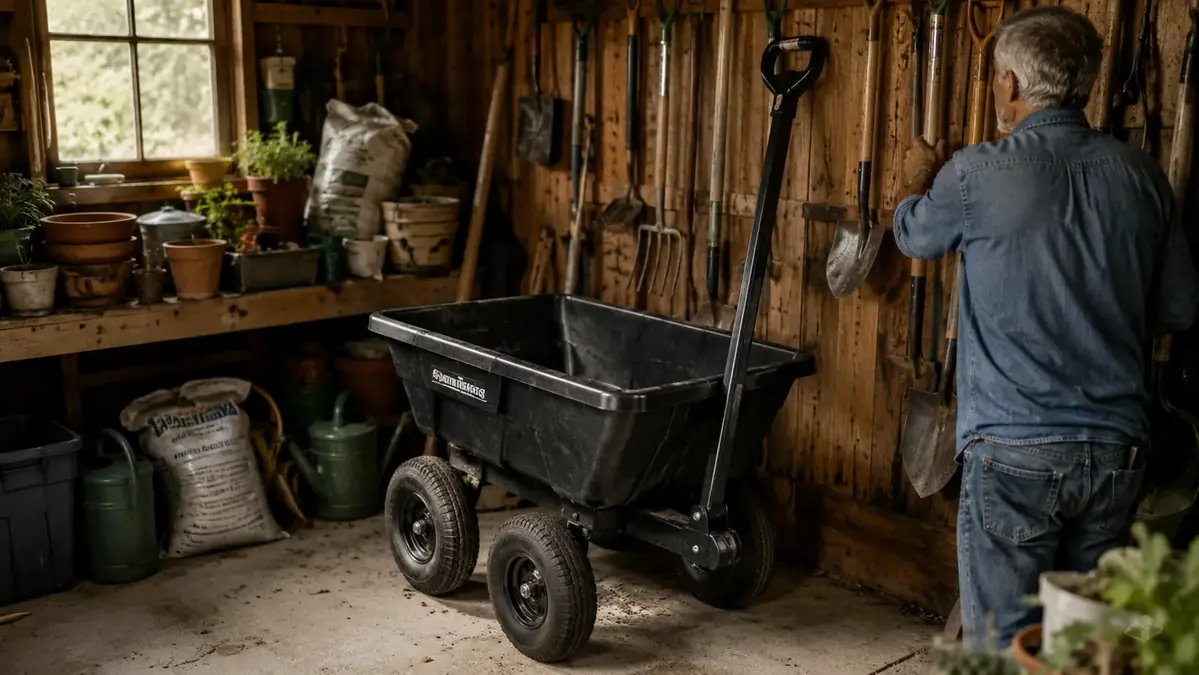
Storage is the last thing I'd flag. This cart does not fold flat, and the tongue sticks straight out even when it's parked, so it takes up real floor space in our shed. If you're tight on storage, measure your space before you buy, because this isn't something you tuck behind a door.
Two Things I'd Do Differently Next Time
If I were setting up a brand new Gorilla Cart today, I'd buy that upgraded locking hitch pin on the same order instead of waiting to lose the flimsy stock one, and I'd throw a cheap tarp over the tub and tires whenever the cart is going to sit for more than a few days between uses. Both of those cost less than ten dollars combined and would have saved me the tire cracking I noticed by month fourteen and the twenty minutes I spent hunting through the grass for a hitch pin that never turned up.
I'd also check the bolt torque at the start of each season now that I know what to look for. It takes maybe five minutes with a wrench, and after watching that slight stress-blanching show up around the tub bolts, I'd rather catch a loose bolt early than find out about it mid-load on a gravel run. None of this is complicated maintenance. It's just the kind of thing you only learn to look for after you've owned one a while, and I'd rather hand it to you now than have you find out the hard way like I did.
What I Liked
- Poly tub has never cracked or split despite heavy, repeated loads
- Quick-dump lever still works smoothly after eighteen months
- Pneumatic tires roll easily over roots, ruts, and uneven ground
- Handles firewood, gravel, mulch, and soil equally well
- Genuinely easier on the back and knees than a wheelbarrow
Where It Falls Short
- Stock tires lose air faster than expected and need monthly checks
- Included hitch pin is flimsy and easy to lose in the grass
- Poly tub shows visible scuffing and sun fading within one season
- Hand-pulling a fully loaded cart uphill is real work, not effortless
- Does not fold flat, so it eats real space in a shed or garage
Who This Is For
If you're moving firewood, mulch, gravel, or yard debris more than a handful of times a season, and especially if you're towing it behind a riding mower rather than pulling it by hand every trip, this cart earns its keep quickly. It's also a good fit if you'd rather deal with the occasional tire top-off than another year of wheelbarrow tips and sore knees, and if you have a shed or covered spot where you can keep an eye on it between seasons.
Who Should Skip It
If you have nowhere dry or shaded to store it and you're not willing to check tire pressure monthly, the tires will wear faster than they should and you'll end up frustrated with a maintenance chore you didn't sign up for. And if most of your hauling is small, light loads, a handful of potting soil bags or a few armfuls of clippings, a smaller yard cart or a good wheelbarrow will save you both money and shed space, and you'll never miss the extra capacity you weren't using anyway.
Know exactly what you're getting before it shows up on your driveway.
This is the honest version, tires, tub wear, and all. If it still sounds like the right fit for your yard, check today's price on Amazon.
Amazon Check Today's Price on Amazon →