
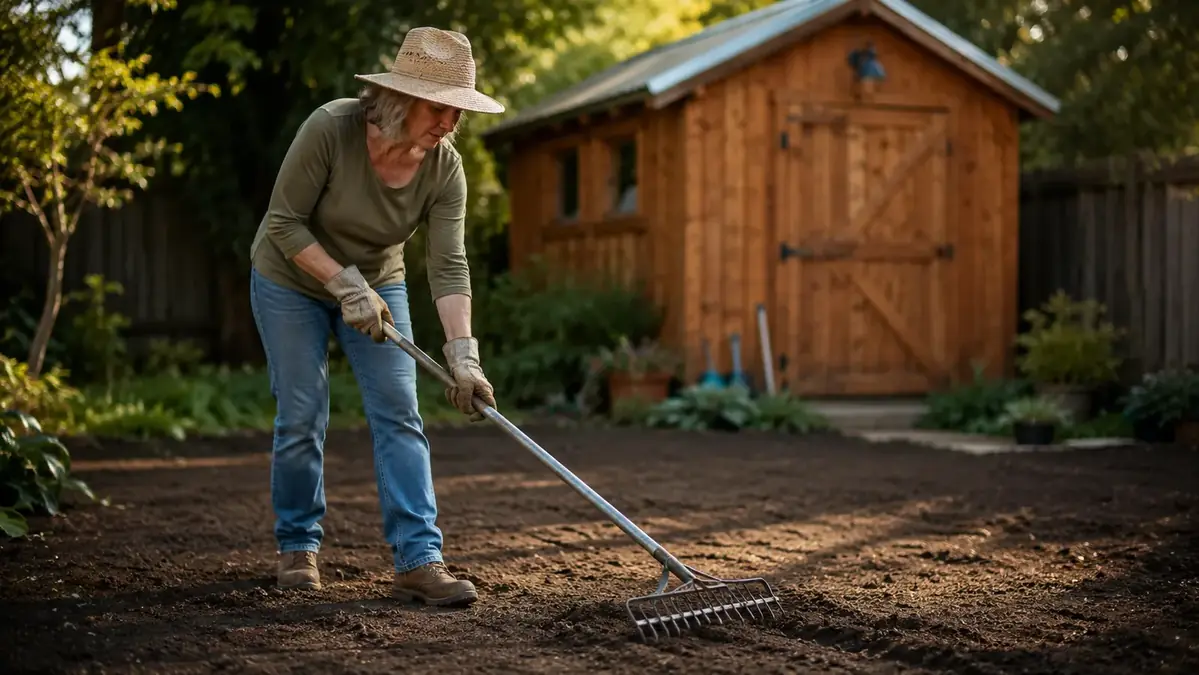
Last April I finally pulled down the above-ground pool that had been squatting behind my garden shed since before we bought this place. Underneath it was a hard, sun-starved ring of dead grass and rutted dirt about 24 feet across, packed down from years of standing water. That is not a job for a hand rake or a garden hoe, and my old bent-tine leaf rake just skated over the top of it. I needed something with real tines and enough handle length to put my whole body behind each pull, so I picked up the Walensee heavy duty bow rake, the 63-inch model with the dual-sided steel head. I have now used it for a full season, from breaking up that old pool ring in April through leveling three raised beds and dethatching a patch of lawn this fall, and I want to walk you through exactly what held up.
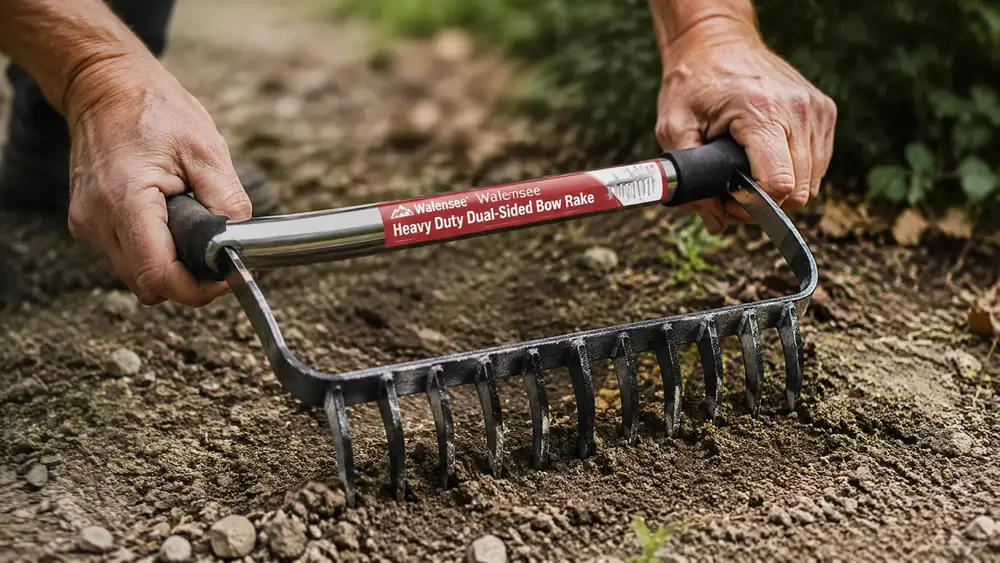
Walensee builds this one with a heat-treated manganese steel head carrying 17 steel tines on one side and a flat leveling edge on the other, mounted on a 63-inch stainless steel handle. Those are real, testable claims, not vague marketing language, and I tested every one of them against actual compacted clay and rocky fill dirt, not a bed that someone had already tilled soft for me.
The Quick Verdict
A genuinely sturdy dual-sided bow rake that broke up hard-packed dirt and leveled fresh soil without complaint, though the wide tine spacing isn't the right tool for a fine seedbed and the length takes some getting used to in tight raised beds.
Amazon Check Today's Price →Still trying to level compacted dirt with a leaf rake that just skates over the top?
The Walensee bow rake gave me the bite and the leverage my old rake never had, on packed clay, rocky fill, and everything in between. Check today's price on Amazon before your next bed prep weekend.
Amazon Check Today's Price on Amazon →How I've Used It
I'm 58, I've got a third of an acre in zone 6, and this past season the bow rake did not sit idle. The pool ring was the first real test, 24 feet of packed-down clay and dead grass that I needed leveled before bringing in topsoil and reseeding. From there it moved to three new 4-by-8 raised beds along the fence line, where I used it to work compost into the top few inches and level the surface before planting. In September I used it to dethatch a scruffy 15-by-20 patch of lawn behind the shed, and in October it helped me spread and level fill dirt after a French drain project along the side yard, about 40 feet of trench backfill that needed grading so it would shed water instead of pooling.
That's four very different jobs on four very different kinds of dirt, and I kept a rough log in my garden notebook because I wanted to know if this rake would hold up the same way in October as it did that first weekend in April, not just perform well once and then go downhill. Short version, it held up. Where it didn't, I'll tell you exactly where, because a review that only lists the good parts isn't worth much to you.
The pool ring was the real stress test. That dirt had been compacted under standing water and foot traffic for years, closer to hardpan than garden soil, and I fully expected the tines to just bounce or skip across the surface the way my old leaf rake did. Instead the steel tines bit in and broke the crust apart within the first few pulls, and by the end of that Saturday I'd leveled the whole 24-foot ring enough to lay four inches of new topsoil over it. My dog Biscuit, a retriever who supervises every yard project from the shade, spent most of that afternoon watching from the porch rather than trying to lie down in whatever I'm working on, which tells you the dirt was still too rough for even him to want to nap in.
The Head, the Tines, and What They Actually Level
The manganese steel head is the part that actually earns this rake its keep. Manganese steel is what a lot of landscape and demolition tools use because it work-hardens as it takes impact, meaning it gets tougher with use rather than softer. I noticed that directly on the pool ring job, where I expected the tine tips to start rolling or dulling against rocks and hardpan the way a thinner stamped-steel rake would, and instead they stayed straight through the whole afternoon. Seven months later, after four separate heavy jobs, the tines are still true and none have bent.
The 17 tines are spaced wider than a leaf rake, close to three-quarters of an inch apart, which is exactly right for breaking up clumps, pulling rocks and roots to the surface, and dragging soil into a rough level. It is not the right spacing for fine seedbed work, and I'll get into that more under where it struggled, but for the job it's built for, moving and leveling real volumes of dirt, that spacing is what gives it the bite a finer rake just doesn't have.
Weight matters too when you're talking about a steel head this size, and this one comes in heavier than a standard garden rake, close to five pounds for the head alone. That extra weight is doing real work for you on hard ground, letting gravity and the swing of the tool break up compaction instead of you muscling every pull with your arms. On the softer raised bed soil it felt like slightly more tool than the job needed, but on the pool ring and the drain backfill, that weight was the whole point.
The Handle and My Hands Over a Full Season
I've got the beginnings of arthritis in my right hand, so handle material and length are not small details for me, they're the difference between finishing a job and quitting halfway through. The stainless steel handle on this Walensee rake is a genuine step up from the wood-handled rake I used for a decade before it. Wood handles flex a little under load, which sounds like a comfort feature but actually means more of the shock transfers back into your palms and wrists on a hard pull. The stainless handle is stiffer, and paired with the cushioned grip near the top, I noticed less jarring in my wrists after a long afternoon than I ever did with the old wood-handled version.
At 63 inches, the handle also gives you real leverage without forcing you to bend at the waist the way a shorter rake does. I'm five-foot-six, and I could work the pool ring standing mostly upright, which mattered more than I expected by the third hour of that first project. My lower back, which usually starts complaining after an hour bent over, held up fine through that whole afternoon.
The stainless finish also means I haven't had to think about rust, even after leaving it leaned against the shed overnight more than once when I lost track of time before dinner. My old wood-handled rake would swell and stick in the head after a rain like that. This one just gets wiped down and goes back to work the next morning.
The Flip Side: Using the Flat Edge to Level
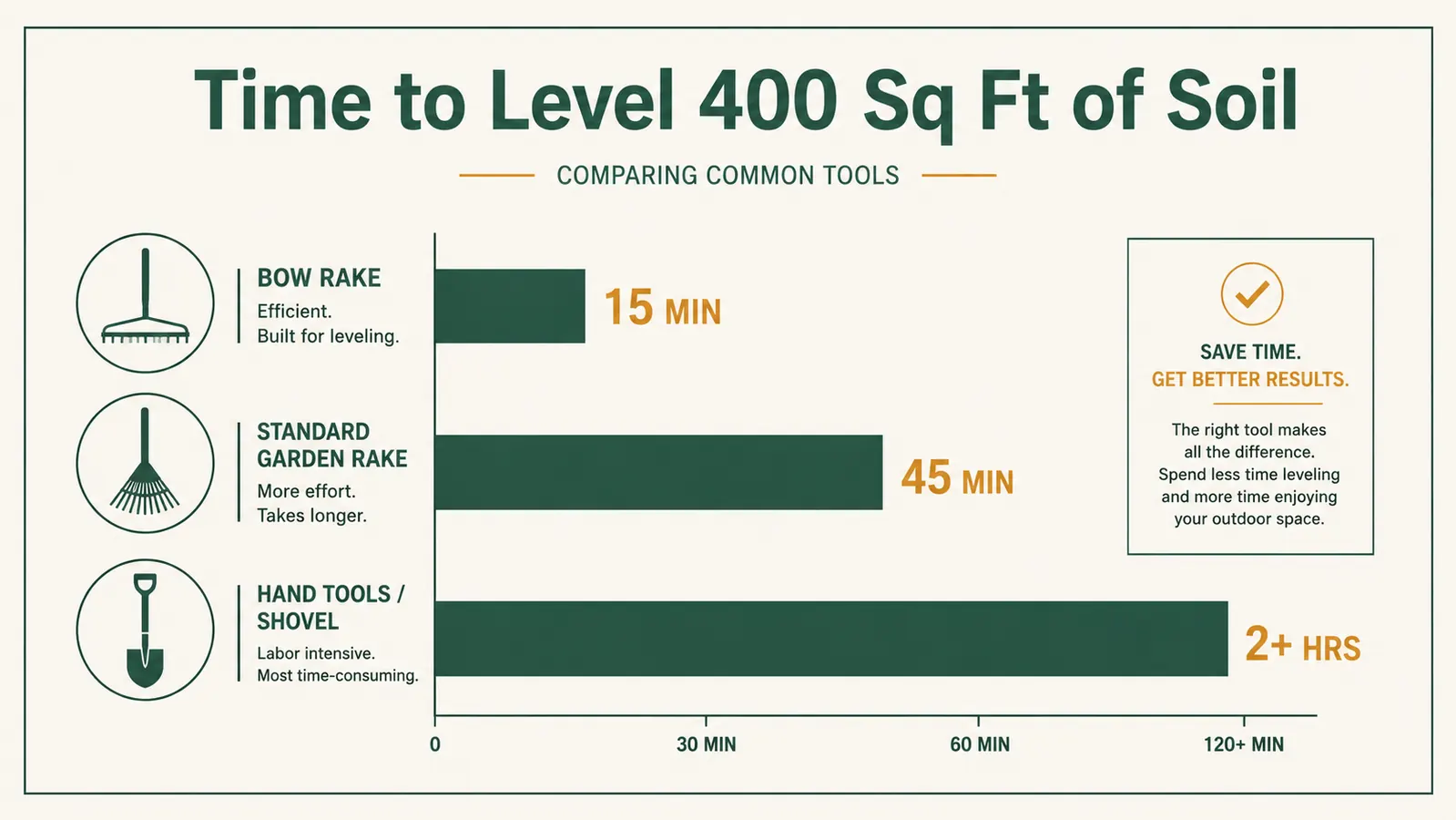
The dual-sided design is the feature I didn't fully appreciate until I got to the raised beds. One side has the 17 tines for breaking up and pulling soil around, and the other side is a flat, straight steel edge for smoothing and leveling the surface once the rough work is done. On the pool ring, I used the tine side to break up the crust and work in the new topsoil, then flipped the rake over and used the flat edge to drag the surface level before seeding, in one pass instead of switching tools.
That same flip came in handy on the raised beds, where I worked compost into the top layer with the tines, then flattened the surface with the back edge so I had a clean, even bed to plant into rather than a lumpy one I'd have to smooth by hand. It's a small thing, but not owning a separate leveling tool saved me a trip back to the shed every time, which adds up over a season of projects.
The one place the flat edge showed its limit was on the French drain backfill, where the fill dirt had a fair number of small rocks mixed in. The flat edge pushed those rocks around rather than pulling them out the way the tine side does, so on rocky fill I ended up doing a first pass with the tines to sort rocks to the surface, then a second pass with the flat edge to level. That's two passes instead of one, but still faster than switching between two separate tools.
What Else I Considered
Before I settled on the Walensee, I looked hard at a traditional wood-handled bow rake from a hardware store brand, priced a few dollars less. I borrowed a neighbor's wood-handled version for an afternoon on the raised beds to compare it directly. The wood handle flexed noticeably more under load, and after 45 minutes my grip hand was more fatigued than it ever got with the stainless handle, even though the head design was nearly identical.
I also looked at a lighter aluminum-head landscape rake marketed for lawn thatch specifically. It was easier to swing for short stretches, but the lighter head just didn't have the mass to break up the pool ring's hardpan, and I could tell within a few pulls it would leave me doing twice the work on anything more compacted than an established lawn.
Price factored in, though less than I expected going in. At right around $24, the Walensee sits at a fair mid-range price for a steel-head tool this size, not the cheapest bow rake on the shelf and not the priciest. After a full season across four different projects, I think that price bought real durability, and a cheaper rake that bends its tines on the first rocky patch costs you more in frustration than the few dollars it saves up front.

Where It Struggled
I want to be straight with you about the tradeoffs, because no tool is right for every job. The three-quarter-inch tine spacing that gives this rake its bite on compacted dirt is too wide for prepping a fine seedbed for something like carrots or lettuce, where you want a fine, crumbly surface. For that finer work, I still reach for a smaller hand cultivator after the bow rake has done the heavy leveling.
The 63-inch length that gives you leverage in open ground also makes this rake a little awkward inside a narrow 4-foot-wide raised bed. I found myself working at an angle more than once, just to keep the handle from catching the bed's frame. It's manageable, but if your beds are narrow and enclosed, expect to adjust your stance rather than swing freely the way you can in open soil.
The head weight that made the pool ring job easier did add up over a long afternoon of continuous use. After close to three hours on the drain backfill, my shoulders felt it more than my hands did. I've learned to break projects like that into two shorter sessions rather than push through one long one, the same way I've had to learn to pace most yard work these past few years.
What I Liked
- Manganese steel head broke up genuinely compacted, hardpan-level dirt without bending
- Dual-sided design lets you break up and level in two passes with one tool
- Stainless steel handle resists rust and flexes far less than a wood handle under load
- 63-inch length gives real leverage and keeps you from bending at the waist for long stretches
- Tines stayed straight and true through four separate heavy-use projects over a full season
Where It Falls Short
- Tine spacing is too wide for fine seedbed prep on small seeds like carrots or lettuce
- 63-inch handle is a little awkward inside narrow raised beds under 4 feet wide
- Head weight that helps on hard ground adds up in your shoulders over long sessions
- Flat edge pushes rocks around rather than pulling them up on rocky fill dirt
The tines bit into that hardpan pool ring on the first few pulls, and that's when I stopped wondering if I'd bought the wrong tool.
Who This Is For
If you're dealing with compacted soil, a new bed you need to level from scratch, or a lawn patch that needs real dethatching, this rake earns its spot in your shed. It's especially good for anyone tackling a project with hard-packed clay or rocky fill, a torn-out patio base, an old pool ring, or backfill from drainage work, because the manganese steel head handles that kind of abuse without bending. Gardeners with wrist or hand strength concerns will appreciate the stiffer stainless handle over a flexing wood one, and anyone tired of a lightweight rake that just skates over hard dirt will notice the difference on the first pull.
It's also worth a look if you manage more than a small suburban lot, since the 63-inch length and real leverage pay off most on bigger open areas where you can take full, standing-upright swings rather than crouching over a small patch.
Who Should Skip It
If most of your work is fine seedbed prep for small seeds, a finer garden rake or hand cultivator will serve you better than the wide tine spacing here. And if all your growing space is in narrow, enclosed raised beds, a shorter-handled rake might be the more comfortable fit even though you'll give up some leverage on tougher ground.
And if you're mostly working in soft, already-tilled soil with no compaction or rocks to speak of, you likely won't ever feel the benefit of the heavier steel head, and a lighter, cheaper rake would do the job fine.
One season in, and that old pool ring finally looks like part of the yard again.
If you've got compacted dirt, a new bed to level, or thatch that won't quit, don't spend another weekend fighting a rake that skates over the surface. See today's price on the Walensee bow rake on Amazon.
Amazon Check Today's Price on Amazon →