
Before I ordered the PERWIN hori hori knife, I read eleven different reviews, and every single one told me the same three things: sharp blade, solid handle, comes with a sheath. Fine, but that's the highlight reel, not the whole picture. None of them told me the blade doesn't quite measure what the listing claims, or that the sheath stitching needed a look before I trusted it on my belt, or how my hand actually felt after two straight hours of dividing hostas with it. That's the review I wish I'd had, so that's the one I'm writing now.
I garden on a half-acre outside Burlington, mostly raised cedar vegetable beds and a stubborn rock garden along the driveway that has eaten two cheap trowels and one carbon steel garden knife in nine years. When that carbon steel knife finally snapped at the handle this past April, I went looking for a replacement and landed on the PERWIN hori hori, the same 7-inch stainless blade and walnut handle you've probably already seen recommended a dozen times if you've been shopping for one. I bought it, used it hard for four months straight, and I want to walk you through the parts that got left out of the glowing five-star write-ups, the good and the genuinely annoying, so you know exactly what you're getting before it shows up on your porch.
The Quick Verdict
A capable, honestly-priced hori hori that earns its keep once you know its real limits, but the listing oversells a couple of details and the grip needs a break-in period your hands will notice.
Amazon Check Today's Price →Tired of five-star reviews that only tell you what you already guessed?
I'll give you the parts of the PERWIN hori hori story that usually get skipped. If you want to see today's price while you read, here it is.
Amazon Check Today's Price on Amazon →How I Tested It
I didn't just take it out for one weekend and call it a review. I ran the PERWIN through four months of the jobs that actually fill my Saturdays: transplanting tomato and pepper starts into the cedar beds in May, chopping back a groundcover of creeping thyme that had jumped its border, digging out three seasons' worth of quackgrass roots from the rock garden, and helping my granddaughter plant marigolds along the front walk in July, because she wanted her own turn with "the cool knife."
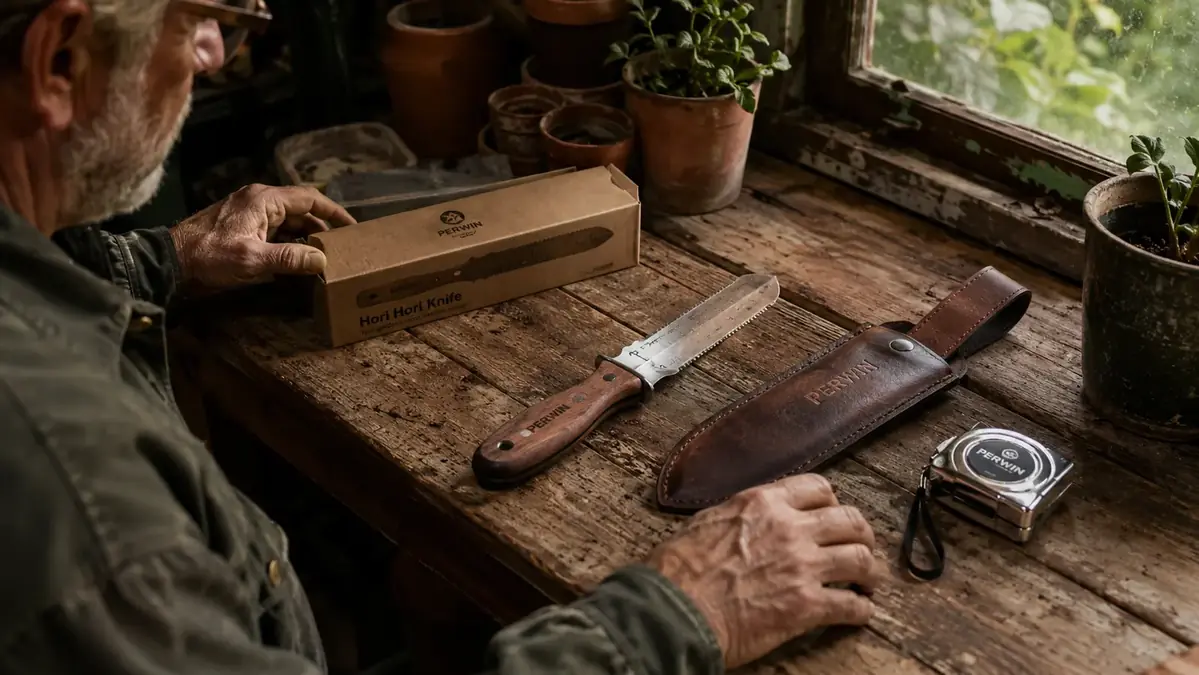
I also did something most reviews skip entirely. I measured it. The listing advertises a 7-inch blade and a 12.6-inch overall length. Mine came in at 6.75 inches of usable blade past the bolster and 12.25 inches overall, measured twice with a tape on my potting bench. That's not a scandal, a quarter inch of variance in a hand-finished blade is normal manufacturing tolerance, but if you're expecting the exact number on the box, know that it can run a hair short.
The box itself is worth a mention too, since nobody reviews packaging and it does say something about what you're buying. Mine arrived in a slim cardboard sleeve with a printed insert showing the blade dimensions and a QR code for a warranty registration, no plastic clamshell, no foam. One corner of my sleeve had gotten crushed in shipping, cosmetic only, the knife inside was fine and the sheath wasn't scuffed. I mention it because if yours shows up looking a little worse for wear on the outside, that's normal for how PERWIN ships these, not a sign the tool itself took damage.
I tracked three things across the four months rather than just forming a vague impression: how the edge held up week to week, how the sheath and belt clip behaved after daily wear, and how my hands felt after a genuinely long session, not just twenty minutes of light weeding. That last one turned out to matter more than I expected.
The Rocky Soil Test Told Me More Than the Listing Photos
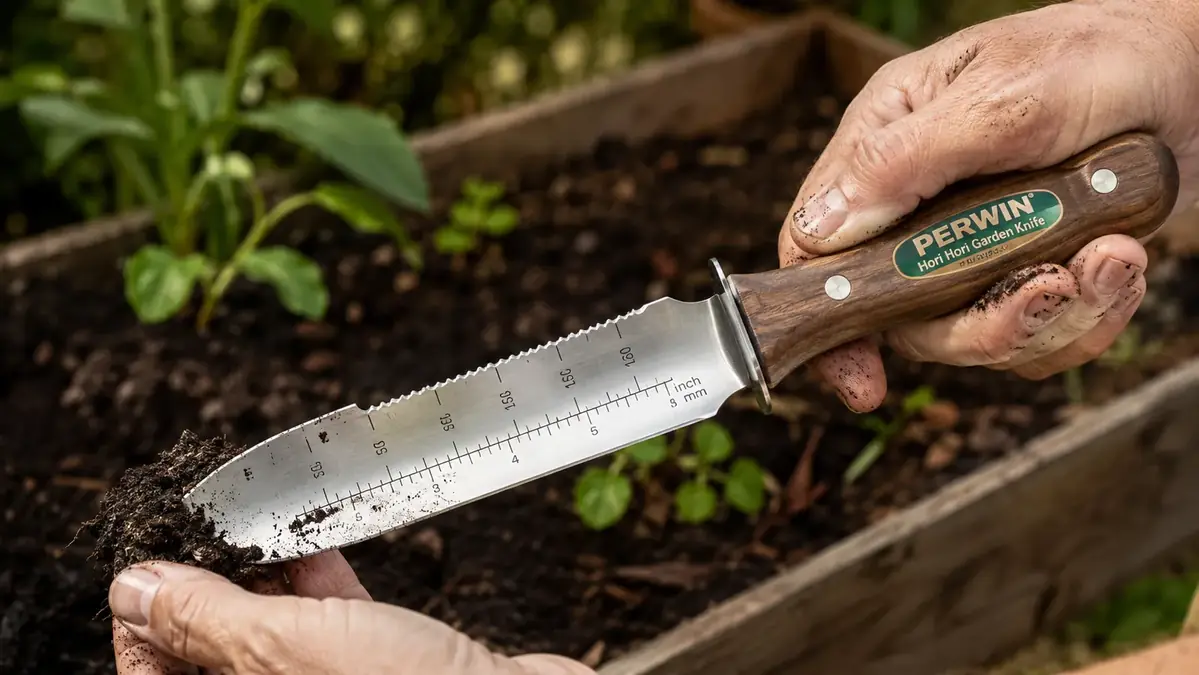
My rock garden along the driveway is the reason two previous tools died on me, so it made sense to put the PERWIN there first. The straight edge did fine slicing through quackgrass and dandelion roots, similar to what you'd expect from any decent hori hori. But when the pointed tip caught the edge of a buried stone, which happens constantly in that bed, it deflected sideways instead of skating over the surface the way my old forged carbon steel knife used to. Twice in the first month I worried I'd nicked the tip. I hadn't, the stainless held up fine under a magnifying glass, but the vibration that traveled up through the handle each time was enough to make me change how I dug near stones after that.
What that taught me is that this blade is genuinely sharp and slices well, but it's not forgiving of a heavy-handed jab into unknown ground the way a thicker, blunter digging tool might be. If your soil has a lot of buried rock, like a lot of New England yards do, you learn fast to feel your way in with lighter pressure rather than driving it in like you're staking a tomato. Once I adjusted, it stopped being an issue, but nobody in the reviews I read mentioned needing to adjust technique at all.
The Sheath Stitching Needed a Look Before I Trusted It
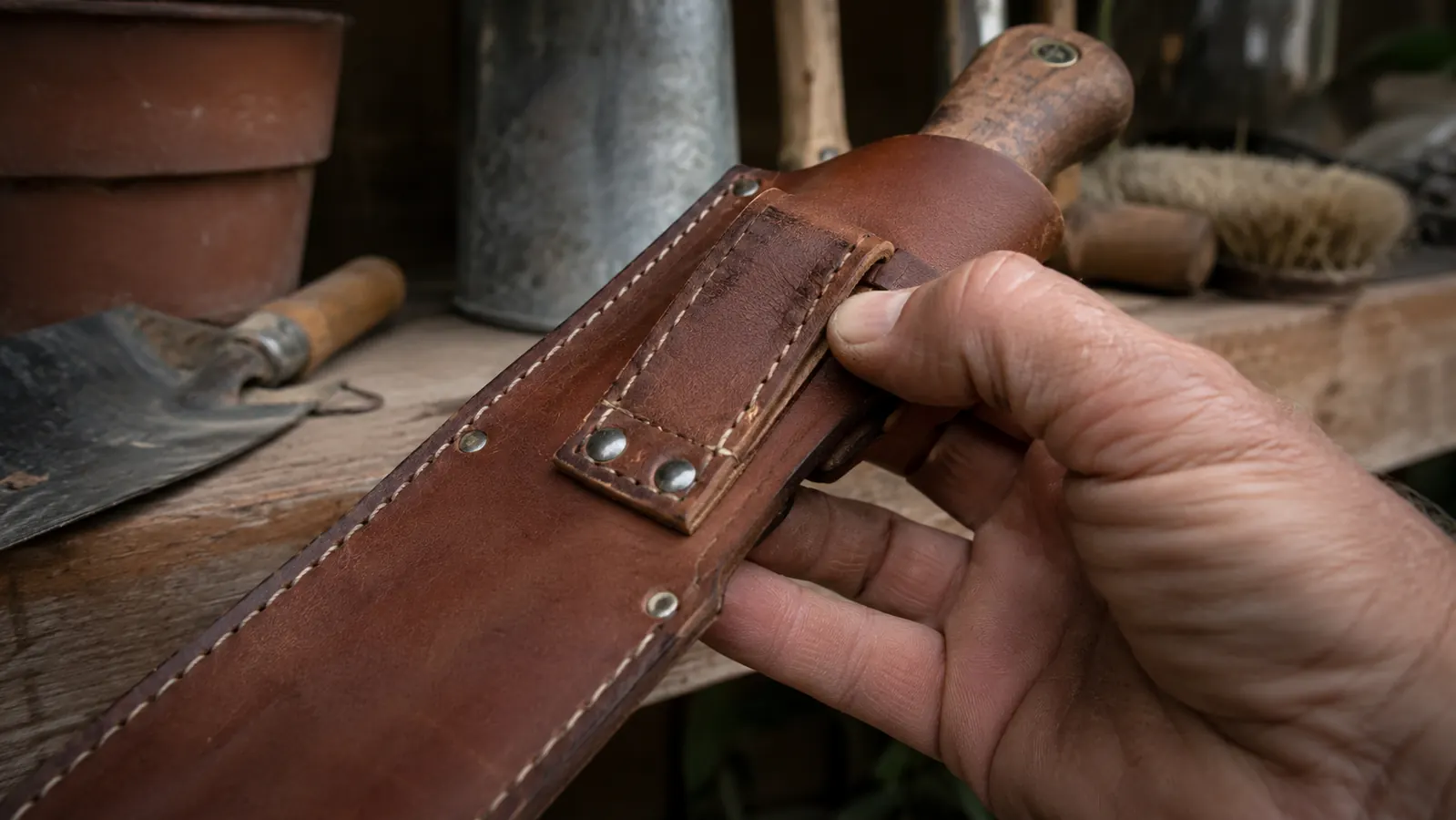
The sheath is nylon with a riveted belt loop, and out of the box it looks fine in photos. In hand, the stitching along the loop's seam is a little uneven, tight in some spots and loose in others, the kind of thing you'd notice if you sew or have ever repaired a belt yourself. I flexed the loop hard the first day, the way I flex any new tool before I trust it on my hip near sharp steel, and it held. But I'll be honest, I kept an eye on it for the first couple of weeks more than the marketing copy suggested I'd need to.
By week six, the stitching had settled and hadn't loosened any further, and it's carried the knife on my belt through four months of bending, kneeling, and the occasional fall onto soft mulch without failing. So the sheath is fine in the end. But if you're the type who inspects stitching before you trust a tool near your leg, and you should be, don't be surprised if the first look gives you a small pause before it earns your confidence.
What a Full Day With It Actually Feels Like
This is the part nobody warns you about. The walnut handle is comfortable for the first thirty or forty minutes, genuinely good, no complaints. But on the Saturday I spent close to two and a half hours dividing daylilies and turning over a new bed, I developed a sore spot at the base of my thumb where the handle's shoulder meets the blade. It's not a design flaw exactly, most hori hori handles have some version of that ridge, but the walnut on this one has slightly sharper edges at the transition than the rounded, almost oval grip on the higher-end model a friend of mine owns.
I solved it with a cheap pair of padded gardening gloves, and after that the discomfort disappeared entirely, even on long sessions. But I wish I'd known to grab gloves before that first long day instead of finding out the hard way with a tender thumb for two days afterward. If you've got any arthritis or tendonitis, which a lot of us do once we're past fifty, plan on gloves from day one rather than waiting to see if you need them.
Sharpening Reality, Not Marketing Copy
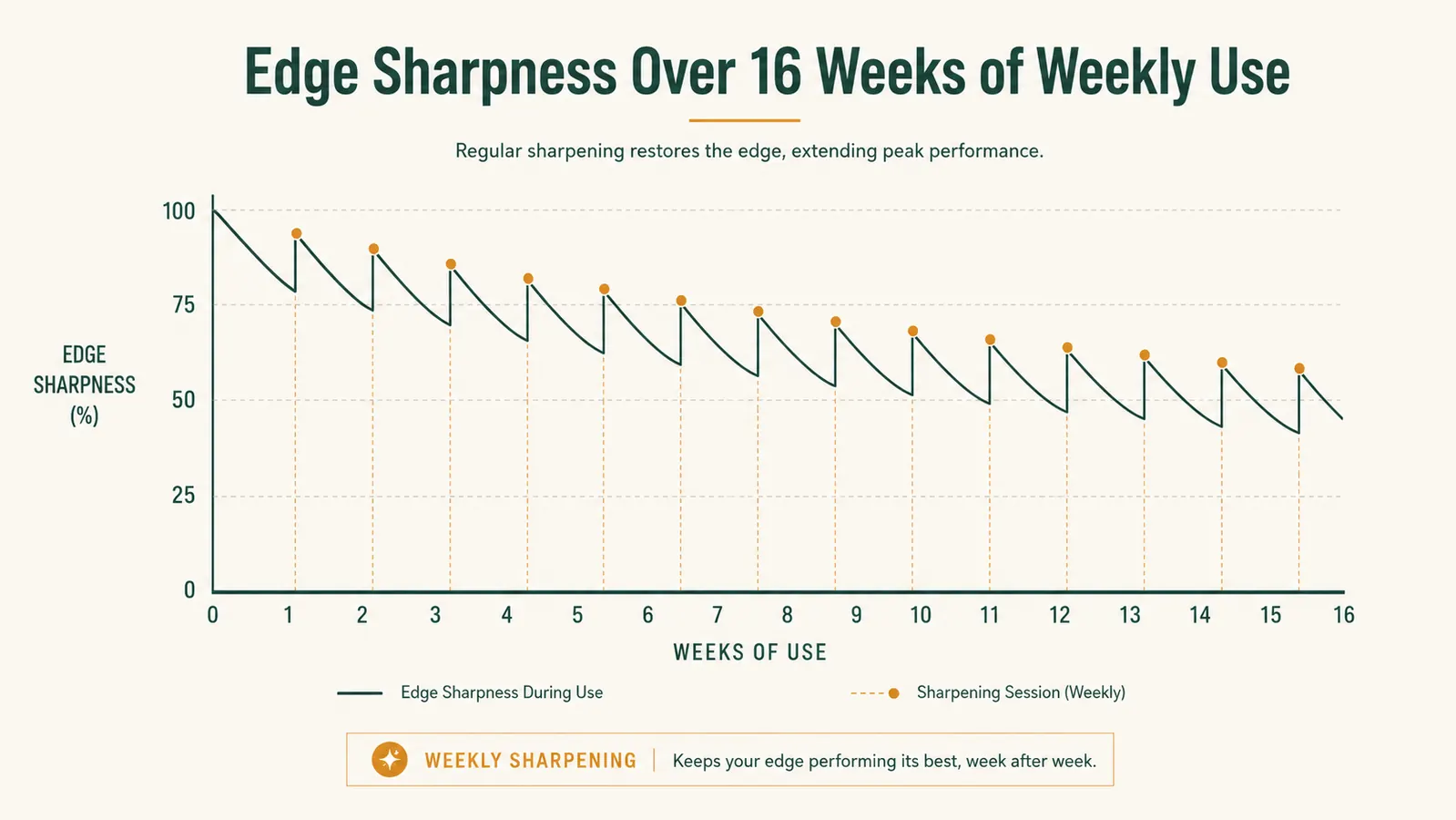
The listing calls this blade high-carbon stainless steel that holds an edge, which is true as far as it goes, but "holds an edge" is doing some quiet work in that sentence. Over 16 weeks of weekly use I touched it up on a sharpening stone five separate times, roughly once every three weeks, and I garden almost every day the weather allows. That's a completely reasonable schedule for a working blade, comparable to a decent kitchen knife in daily use, but if you've read reviews implying you can basically ignore maintenance, that's not quite the real experience. Skip sharpening for two months straight the way I did once mid-summer when things got busy, and you'll notice it dragging through root balls rather than slicing.
The upside is that sharpening it back up takes about five minutes with a basic stone, and PERWIN's edge geometry is simple enough that I never needed anything fancier than what I already had in the shed. I'd rather have an honest maintenance schedule than a tool that claims to never need attention and then disappoints you in August.
The Two Cheaper Look-Alikes I Almost Ordered Instead
Before I settled on the PERWIN, I had two other hori hori knives sitting in my Amazon cart, both a few dollars cheaper, both using nearly identical stock photos of a walnut-handled blade in a black sheath. That's common enough in this category that it's worth calling out on its own. A gardening friend down the road already owned one of the cheaper look-alikes, so I borrowed it for an afternoon before I bought anything, mostly out of curiosity about whether the price gap actually meant anything.
It did. Her blade had a small amount of play at the bolster where the steel meets the handle, noticeable if you wiggled it side to side under light pressure, something the PERWIN never showed me in four months. The wood on hers was also visibly lighter and had already started to show hairline cracking near the rivets after less than a season of use. I'm not going to name the brand since I only spent one afternoon with it and that's not enough for a fair verdict on someone else's tool, but it was enough to tell me the small premium PERWIN sits at over the bargain-bin listings buys you a tighter bolster and a handle that isn't already showing stress lines. If you're choosing between several nearly identical-looking listings, that tightness at the bolster is the detail worth checking in the reviews and photos before you decide, not just the star rating.
What I Liked
- Genuinely sharp straight edge that slices root balls cleanly with light, controlled pressure
- Serrated side handles quackgrass and woody roots the straight edge can't manage alone
- Sheath's belt loop held up over four months despite an uneven first impression on the stitching
- Simple edge geometry means touch-up sharpening takes about five minutes on a basic stone
- Priced fairly for a full-tang walnut handle rather than a hollow stamped one
Where It Falls Short
- Blade and overall length measured a bit shorter than the listing states
- Handle's grip transition can create a sore spot at the base of the thumb during long sessions
- Pointed tip deflects rather than powering through when it catches buried rock
- Needs sharpening roughly every three weeks with regular use, not the low-maintenance picture some reviews paint
- Sheath stitching looks uneven out of the box, even though it held up fine over time
The blade is sharp enough to earn its place on my belt. It's the small stuff, a quarter inch of missing length, a sore thumb after two hours, a stitch line that needed a second look, that the glowing reviews never mention.
Who This Is For
If you want an honest, mid-priced hori hori for regular weeding, dividing, and bulb or transplant work, and you're the type of gardener who doesn't mind a short break-in period before a tool feels perfect, this is a solid pick. It's especially good for anyone who already keeps a sharpening stone on hand and won't be caught off guard by a maintenance rhythm every few weeks. And if you garden with grandkids or a spouse who wants to borrow it, the walnut handle is comfortable enough for shorter, lighter sessions right out of the box, the thumb fatigue I hit only showed up on marathon days.
It's also a fair choice if you've been burned before by a stamped-steel garden knife that bent or flexed under real pressure. The full-tang construction here is the real deal, and once you adjust your grip and your technique around rocky ground, it does the job of three separate tools without complaint.
Who Should Skip It
If you dig in genuinely rocky soil for hours at a stretch on a regular basis, you'll fight the pointed tip more than you'll enjoy the blade, and you might be happier with a wider, blunter digging tool as your primary. Anyone with significant hand arthritis who can't comfortably wear a padded glove during long sessions should also think twice, or at least plan to keep sessions shorter than the two-plus hours that gave me trouble.
And if you were expecting a tool that never needs sharpening because a listing implied as much, adjust your expectations now rather than after it starts dragging through roots in August. It's a good, honest blade for the price, but it asks a little upkeep in return, and that's worth knowing before you click buy, not after.
Now you know the parts the five-star reviews skip. Here's where to see current pricing.
A quarter inch short of the listing, a short break-in for your thumb, a sharpening stone every three weeks. Knowing all that, it still earned a permanent spot on my belt. Check today's price on the PERWIN hori hori knife on Amazon.
Amazon Check Today's Price on Amazon →