

I almost didn't buy this rake. My old wood-handled leaf rake was already twelve years old, the handle fuzzed and splitting near the ferrule, and I told myself a steel rake for lawn work was a waste of money when I already owned a tool that technically did the job. Then in May I tried to level a scraped-off patch where we'd pulled out a dead lilac stump, hit a seam of rocky fill dirt under the topsoil, and watched the tines on that old rake fold sideways like a cheap umbrella caught in wind. That's when I ordered the Walensee heavy duty bow rake, the 63 inch stainless steel model with the dual-sided steel head, and started paying closer attention to the stuff nobody mentions in the glowing five-star reviews: what the weld seams look like after real use, how the weight sits in your hands after an hour, and whether a steel handle is actually worth the jump in price over wood.
This isn't going to be a puff piece. I like this rake, and I'll tell you exactly why in a minute, but I also want to walk through the three or four things that annoyed me before I get there, because that's the part most reviews skip entirely. If you've ever bought a tool off five-star reviews and been disappointed the first weekend you actually used it, you know why that matters.
The Quick Verdict
A genuinely tough, well-built bow rake for the price, but the wide tine spacing and top-heavy swing aren't for everyone, and it's not the upgrade some reviews make it sound like if all you're doing is light leaf cleanup.
Amazon Check Today's Price →Tired of tools that look sturdy in the listing photos and fold the first time they hit rocky dirt?
I put the Walensee bow rake through gravel, hardpan, and a chicken run floor before I trusted it enough to recommend it. See today's price on Amazon and read the full breakdown below before you decide.
Amazon Check Today's Price on Amazon →How I've Used It
I'm 62, I keep a half acre in zone 5 with a small horse pasture edge along the back fence, and I've had this rake for a little over seven months now. It's leveled the gravel driveway twice after our plow guy chewed up the surface last winter, smoothed the dirt floor of our chicken run three separate times, and helped me break up a stubborn compost pile that had gone anaerobic and clumpy near the bottom. It's also done the boring stuff, raking up crabapple debris in October and dragging leaf mulch off the front bed in November.
None of that is glamorous work, but it's the kind of repeat, unglamorous use that tells you whether a tool is actually good or just photographs well. My neighbor Dot borrowed it in August to level a spot for a new shed pad, brought it back a week later, and asked where I'd bought it. That's a better endorsement than anything I could write, but I still want to walk you through where it earned that and where it didn't.
I also kept it out in the elements more than I probably should have, leaning against the fence overnight more than once, left in the bed of the truck during a rainstorm in July. I did that on purpose, partly out of laziness and partly because I wanted to see how it would hold up to the kind of neglect most of us actually put our tools through, not the careful storage a manufacturer assumes in their marketing copy.
The First Impression Nobody Photographs
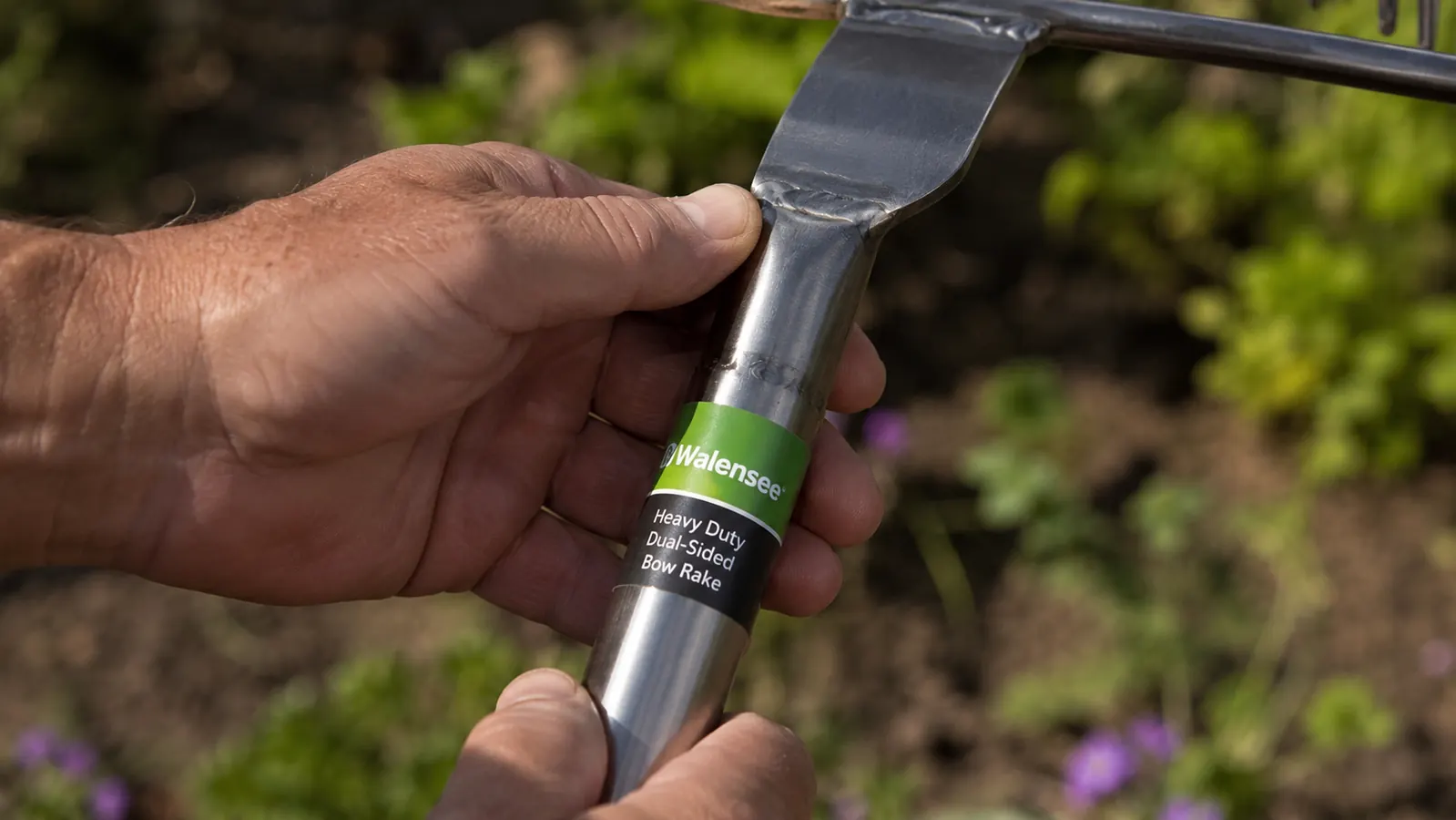
When it showed up, the head felt heavier out of the box than I expected from the listing photos, which show it at an angle that makes the whole tool look sleeker than it is in your hand. There's a light protective coating on the steel that wipes off with a rag, and underneath it the welds at the neck are visible, a little rough looking rather than the smooth, machined joint you might picture from the product shots. It's not a flaw exactly, it's just not what the photos suggest, and if you're the type who cares about a tool looking as polished as it performs, that first unboxing might underwhelm you a little.
The grip end of the handle is bare stainless steel with no rubber or foam padding, which is another detail that doesn't show up clearly in the product photos. For most jobs it doesn't matter, but on a hot July afternoon it got warm enough in direct sun that I wished I'd worn gloves, and in January it went the other direction and got cold enough that bare-handed use for more than a few minutes wasn't comfortable. A wood handle doesn't have either problem.
What the Steel Handle Actually Feels Like After a Season
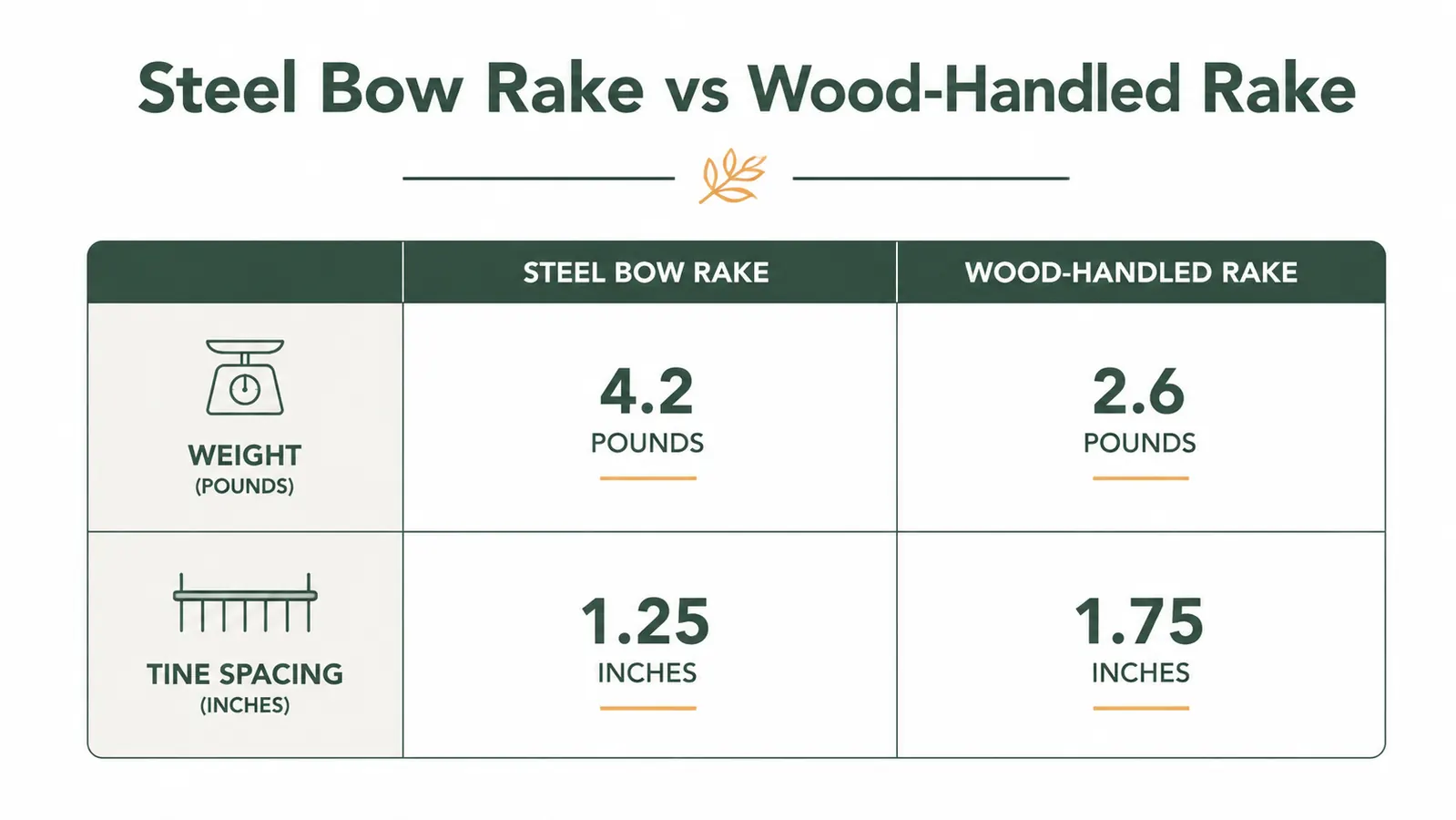
Here's the part the marketing photos don't show you. The 63 inch stainless steel handle is noticeably heavier than the wood-handled rake it replaced, by my kitchen scale about a pound and a half more, most of it up near the head. For short jobs, five or ten minutes of leveling a small patch, you won't notice. Past the thirty minute mark, especially doing repetitive overhead-style strokes like breaking up a compost pile, I felt it in my forearms in a way I never did with wood. If you've got any wrist or elbow issues, that top-heavy balance is worth testing before you commit to a full afternoon with it.
The handle itself has held up better than I expected. No rust after a wet fall left it leaning against the fence more nights than it should have, no flex or wobble at the neck even after that first job on hardpan back in May. But in January, when temperatures dropped into the teens, the steel got cold enough that I wished I'd worn thicker gloves, something you'd never think to check for with a wood handle. That's a small thing, but it's exactly the kind of detail that gets left out of most reviews.
The welded joint where the head meets the handle is the one spot I keep an eye on. Seven months in, it still looks solid with no visible cracking or rust bleed, but I've read enough reviews of other steel tools to know that's the failure point to watch, and I'll update this if anything changes. It's also noticeably thicker in diameter than my old wood handle, which some folks with smaller hands might find awkward to close a full grip around, especially for longer sessions.
Where the Wide Tine Spacing Falls Short
This is the biggest honest con, and it's the reason I wouldn't tell every gardener to run out and buy this exact rake. The 17 steel tines are spaced for heavy work: soil loosening, thatch pulling, dragging fill dirt into place. They are not spaced for fine seedbed prep or for raking small gravel and pea stone without half of it slipping straight through. When I tried to use it to smooth a bed of pea gravel around the mailbox post, the stones just fell between the tines and I ended up back out there with a leaf rake finishing the job anyway.
Topdressing the lawn is where it really showed its limits. I spread a thin half-inch layer of screened compost over a bare patch near the mailbox in June, hoping to work it in level with a few passes, and the wide-set tines just dragged streaky rows through it instead of smoothing it flat. I ended up finishing that patch with the back of a push broom. If your main use case is fine topdressing, small-seed bed prep, or fine gravel work, this tool is the wrong shape for the job, full stop, and no amount of brand loyalty changes that.
I mention this because a fair number of the online reviews for this rake come from people who bought it for exactly that kind of fine work and then complained the tines were too wide, which isn't really a defect, it's a mismatch between the tool and the task. A bow rake was never built to be a fine-grade rake, and knowing that going in will save you the same frustration I had that first weekend with the carrots.
What Other Reviews Get Wrong
A handful of the negative reviews I read before buying complained about the head being loose out of the box. Mine wasn't, but I did notice a very slight amount of play at the neck in the first couple weeks that seemed to tighten up and settle once the coating wore off the joint and the metal seated properly under real use. I'd call that normal break-in rather than a defect, though I understand why someone expecting a rock-solid feel on day one might be put off by it.
On the flip side, a lot of the five-star reviews praise it purely for durability without mentioning the weight or the tine spacing at all, which is how you end up with buyers who expected a lightweight all-purpose rake and got something built for a different job. Read both ends of the review spread before you buy, not just the highlight reel, because the truth about this rake sits somewhere between the two.
The Price Question: Steel vs Wood Handle
At under 25 dollars, this rake sits close enough to a decent wood-handled bow rake that the price gap alone isn't a real reason to skip it. The honest comparison is durability against weight. My old wood-handled rake, the one that folded on rocky fill, cost about the same when I bought it new. It was lighter in the hand and easier on my forearms for long stretches, but it couldn't take a hit from buried rock or root without bending a tine or splitting near the ferrule eventually. The Walensee hasn't bent once, not on the driveway gravel, not on hardpan, not on a rock I clipped in the pasture edge that would have taken a wood-handled tine clean off.
So the real tradeoff isn't cost, it's weight versus toughness. If you're mostly doing light cleanup and don't fight rocky or compacted ground, a lighter wood-handled rake will feel better in your hands and cost about the same. If you're breaking up hardpan, leveling gravel, or working ground with buried debris, the steel earns its extra pound and a half every single time you hit something the wood version would have snapped on.
I also priced out a couple of the pricier forged bow rakes in the 45 to 60 dollar range while I was shopping, and honestly couldn't find a meaningful jump in build quality to justify the extra cost for a backyard user like me. Unless you're a landscaper putting a rake through daily commercial use, the mid-priced steel option like this one seems to be the sensible landing spot.
Where It Earned Its Keep
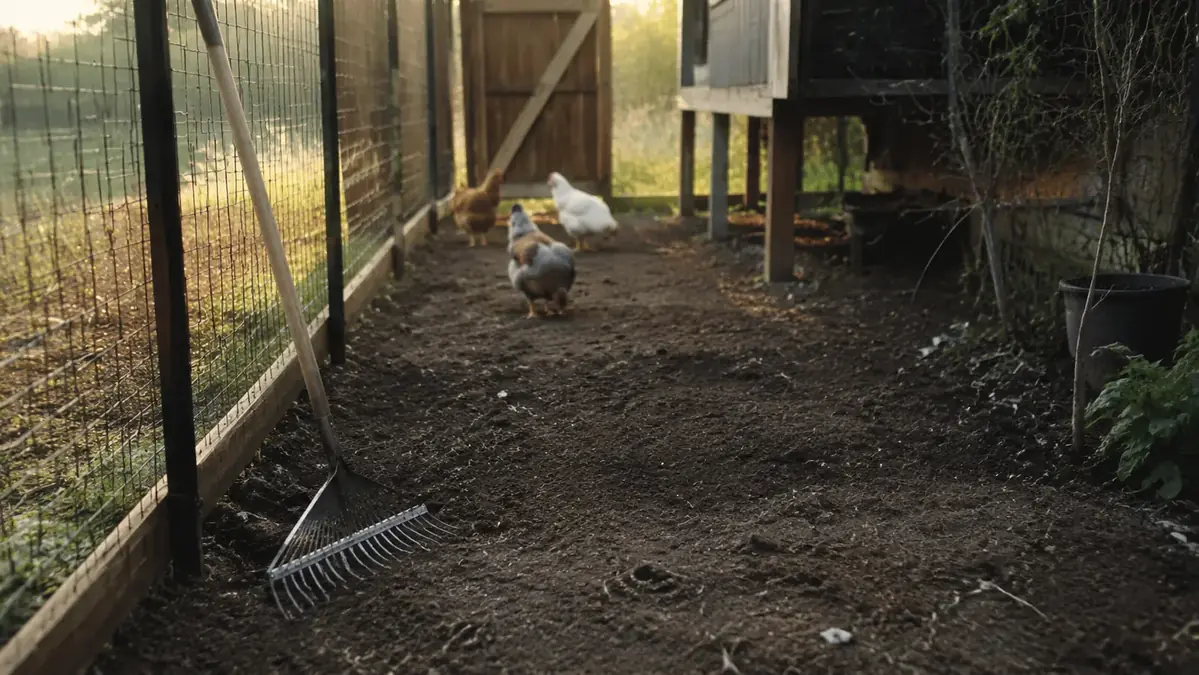
The chicken run floor is where I've been happiest with it. Three times now I've used the flat back edge to smooth and level the dirt after the hens dig their dust-bath craters down to bare ground, and the flat side does that job better than anything else I've owned, including a proper landscape rake that's twice as wide and half as easy to store.
The gravel driveway repair was the other standout. After the plow left ruts and a couple of bare patches down to the base layer, I used the tine side to pull loose gravel back into the low spots and the flat side to smooth the surface. It took about forty minutes for a stretch roughly 30 feet long, and it's held its grade through two more snowfalls since.
It also came in handy in a way I didn't expect, breaking apart a half-frozen pile of wood chips I'd left uncovered too long over the winter. The tines chewed through the crusted top layer where a lighter rake would have just bounced, and within twenty minutes I had it loose enough to shovel into the wheelbarrow for mulching the beds.
What I Liked
- Steel head and welded joint have shown zero flex or bending after seven months on gravel, hardpan, and buried debris
- Dual-sided design (tines and flat edge) genuinely covers two jobs, saved me from buying a separate landscape rake
- Held up through a wet fall and a hard winter with no rust on the handle or head
- Priced close enough to a basic wood-handled rake that toughness comes at almost no premium
Where It Falls Short
- About a pound and a half heavier than a comparable wood-handled rake, noticeable on jobs past 30 minutes
- Tine spacing is too wide for fine seedbed prep or small gravel, you'll still want a second tool for that
- Bare steel handle gets uncomfortably hot in summer sun and cold in freezing weather without gloves
- Top-heavy balance takes some getting used to if you've only ever used wood-handled tools
The real tradeoff isn't cost, it's weight versus toughness, and only you know which side of that line your yard actually falls on.
Who This Is For
If your yard fights back, rocky fill, compacted clay, a gravel driveway that needs regrading every winter, buried debris from an old fence line or torn-out patio, this rake is worth the money and the extra weight. It's also a good pick if you keep livestock or poultry and need a dual-purpose tool for leveling dirt floors and breaking up bedding. Anyone who's snapped a tine on a cheaper rake fighting real ground will appreciate what the steel head and welded joint hold up to, and at this price it's an easy tool to justify keeping in the shed even if it isn't your daily grab.
Who Should Skip It
If you mostly do light leaf and debris cleanup on soft, established lawn, or you need a rake for fine seedbed and gravel work, save your money or look at a lighter, more closely-spaced tool instead. Anyone with wrist or forearm sensitivity who hasn't handled a top-heavy steel-handled tool before should try one in person first, since the extra pound and a half is the one honest complaint I keep coming back to. And if bare metal against bare hands in extreme heat or cold bothers you, plan on keeping a pair of gloves near wherever you store it.
Still deciding between the wood-handled rake you already have and something that won't fold on rocky ground?
Seven months of gravel, hardpan, and a chicken run floor later, the Walensee bow rake earned its spot in my shed. Check today's price on Amazon and see if it fits the ground you're actually working.
Amazon Check Today's Price on Amazon →